 Winery Tours Florence
Home › Guides › What Is Chianti Classico Riserva? A Guide for Wine Tours from Florence
What Is Chianti Classico Riserva? A Guide for Wine Tours from Florence
Chianti Classico Riserva is a Sangiovese red from the Chianti Classico zone between Florence and Siena that must age at least 24 months, including 3 months in the bottle. This guide explains what the Riserva level means, how it differs from Chianti and Gran Selezione, how it tastes, what to eat with it and where to taste it on winery tours from Florence. The Tuscan wineries tour with lunch at $168.20 lists Riserva in its tastings at each estate.
Quick answer The short answer on Chianti Classico Riserva
Riserva is an aged level of Chianti Classico: at least 80% Sangiovese and a minimum of 24 months of ageing, of which 3 months are bottle refinement. Expect cherry, fig, baking spice, leather and vanilla with high acidity and tannins. On a tour from Florence, the 8-hour Tuscan wineries tour with lunch at $168.20 pours Chianti Classico, Riserva and Super Tuscans at each estate.
Key takeaways
- Compare every winery tours florence option before you pick one
- Taste Riserva at each estate on the Tuscan wineries tour with lunch
- Taste Chianti Classico at a family-owned organic winery on the wine safari Florence with lunch
- See how Riserva differs from Chianti before you taste
What is a Chianti Classico Riserva?
It is a DOCG red from the Chianti Classico zone made with at least 80% Sangiovese and aged a minimum of 24 months, of which 3 months happen in the bottle.
The common wrong belief is that Riserva is a grape, a brand or a special recipe. It is none of those. Riserva is a legal ageing level written into the production rules.
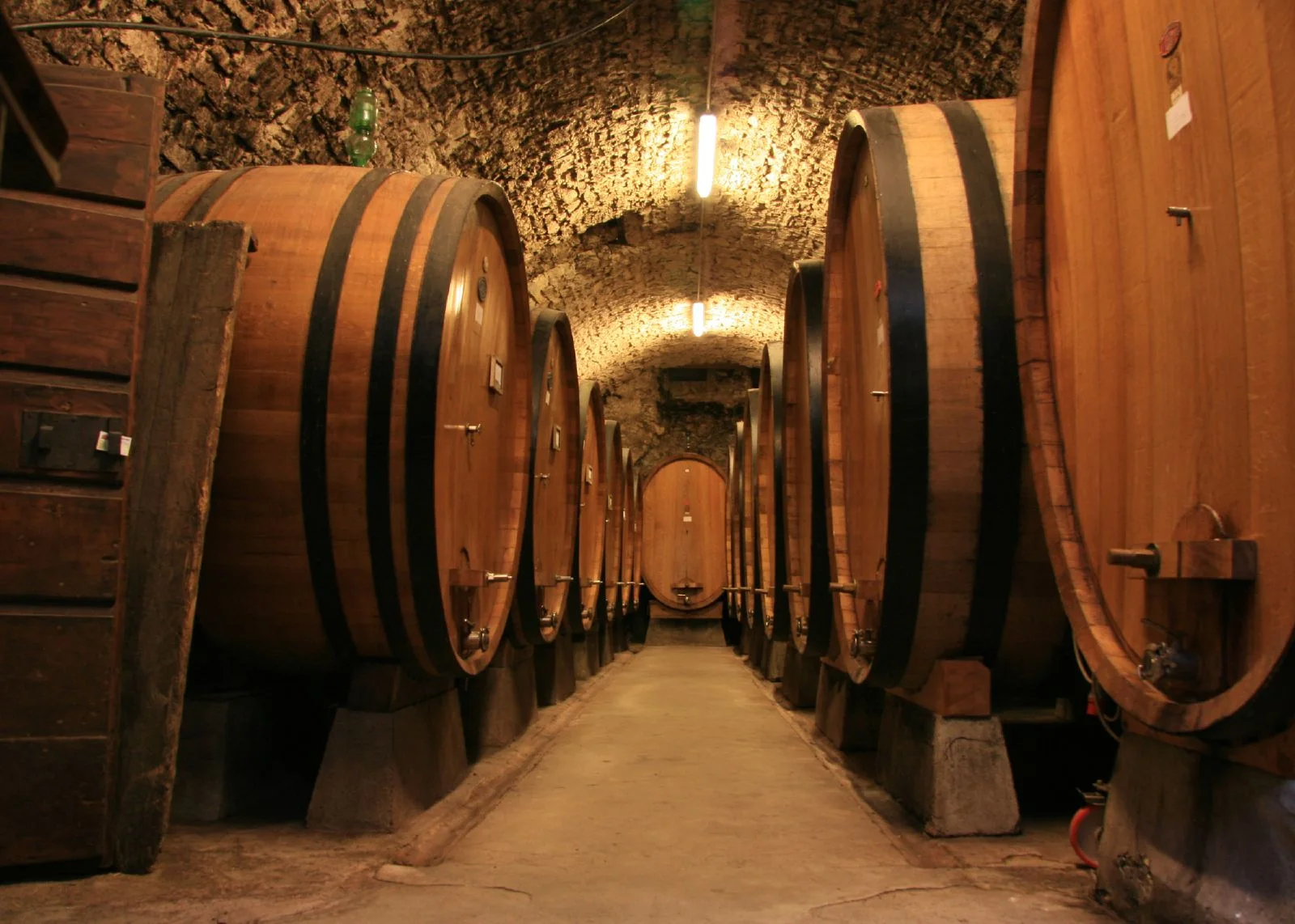
Large oak botti ageing Chianti Classico in a cellar in Castellina in Chianti. Photo: Rob & Lisa Meehan, CC BY 2.0, via Wikimedia Commons
The word Riserva is a rule, not a grape
Riserva on a Chianti label tells you how long the wine aged before release. The Chianti Classico consortium sets the floor at 24 months of ageing, of which 3 months are bottle refinement. The wine must also be at least 80% Sangiovese, the same minimum share used for the base Chianti Classico, with up to 20% of other red varieties.
The grapes come from the Chianti Classico production zone, which covers 71,800 hectares shared between the provinces of Florence and Siena. The whole territories of Castellina in Chianti, Gaiole in Chianti, Greve in Chianti and Radda in Chianti sit inside it, with parts of Barberino Tavarnelle, Castelnuovo Berardenga, Poggibonsi and San Casciano Val di Pesa.
For a Florence wine day this matters in one way: the Chianti Classico tours from the city taste inside this zone, and the Tuscan wineries tour with lunch names Riserva among the wines poured.
Sources: Chianti Classico Consortium, Chianti Classico Consortium.
What is the difference between Chianti and Chianti Classico Riserva?
Plain Chianti is a different DOCG with eight subzones and lighter ageing rules, Chianti Classico comes only from the historic zone between Florence and Siena, and Riserva is the Classico tier aged at least 24 months.
Chianti, Chianti Classico and Riserva are three levels of the same family. The labels look alike, so a simple table helps before your tour.
The three tiers side by side
Chianti DOCG has eight subzones, including Colli Fiorentini, Colli Senesi, Rufina and Montespertoli, and its own consortium founded in 1927. Chianti Classico is the older and stricter zone. A 1932 ministerial decree let wine from the 1716 zone use the adjective Classico, the area got DOC status in 1967 and was upgraded to DOCG in 1984. Since 2013 the Black Rooster mark must appear on every Chianti Classico bottle.
There is one level above Riserva. Chianti Classico Gran Selezione needs at least 90% Sangiovese, only indigenous red grapes for the remainder, and a minimum of 30 months of ageing including 3 months of bottle refinement. Gran Selezione comes from estate-owned grapes only, either a single vineyard or a selection of the best grapes.
The table sets the three Chianti Classico levels side by side, with grape and ageing minimums from the Chianti Classico consortium.
| Level | Grape rule | Minimum ageing | Where the grapes grow |
|---|---|---|---|
| Chianti Classico Annata | At least 80% Sangiovese | 12 months | Chianti Classico zone, 71,800 hectares between Florence and Siena provinces |
| Chianti Classico Riserva | At least 80% Sangiovese | 24 months, of which 3 in bottle | Same Chianti Classico zone |
| Chianti Classico Gran Selezione | At least 90% Sangiovese, rest indigenous red grapes | 30 months, of which 3 in bottle, estate-owned grapes only | Same Chianti Classico zone |
Sources: Chianti Classico Consortium, Chianti Classico Consortium, Chianti Consortium.
Is Chianti Classico Riserva good?
Yes, the Riserva rules require 24 months of ageing against 12 for a Chianti Classico Annata, and the style can mature over several years.
The rules give Riserva 12 more months of ageing than the Annata, and tasters describe more layered flavours.
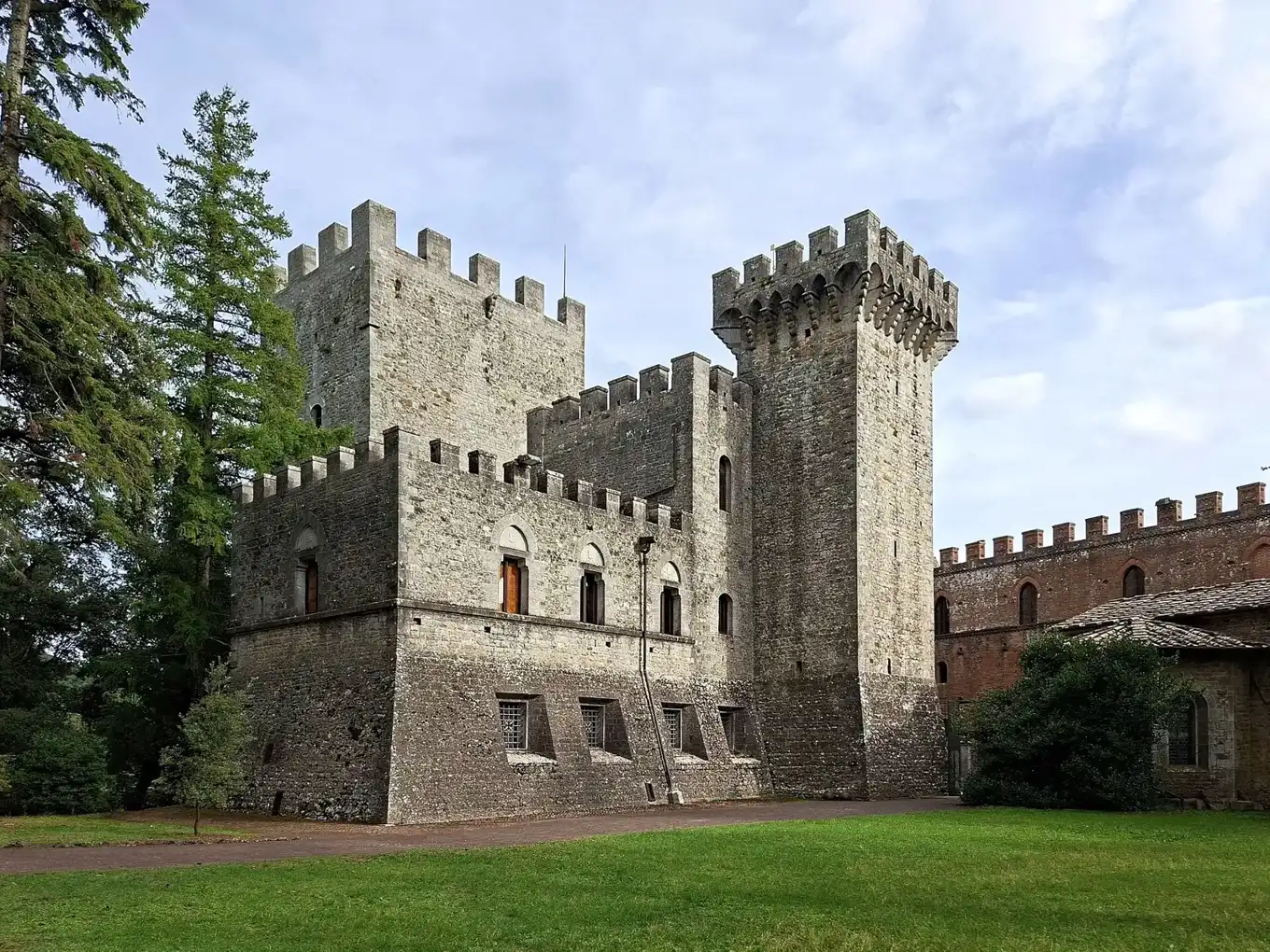
The fortress walls of Brolio Castle in Gaiole in Chianti. Photo: Argentieri.Andrea, CC BY-SA 4.0, via Wikimedia Commons
Why the extra 12 months change the taste
Wine Folly describes the style as made with at least 80% Sangiovese, showing flavors of cherry, fig, baking spices, leather and vanilla, with high acidity and tannins. Retailer notes for a Riserva add blackberry, dried dark cherry, plum, spice and menthol, described as a thickly layered red.
The style can mature over several years, and one producer lists an ageing window of 6 to 8 years with an alcohol of 13.5% vol. On a tasting day, ask the host to pour the Riserva next to the estate's Chianti Classico to taste what the extra 12 months add.
Retailer notes say the grapes come from shallow clay soils at high elevation between Florence and Siena.
Is Chianti Riserva sweet or dry?
It is a dry red, with high acidity and tannins.
The sweetness question comes up because Sangiovese shows cherry and fig notes. Fruit aromas are not sugar.
How to read the fruit on your palate
Chianti Classico Riserva is a red with high acidity and tannins, and the cherry, fig and plum notes come from the Sangiovese fruit and the oak spice, which tasters read as ripe fruit rather than sweetness.
On your tour, ask the host to pour the Riserva next to the estate's Chianti Classico. The Riserva has had at least 24 months of ageing against 12, and the leather and vanilla notes Wine Folly lists come with that time.
Source: Chianti Classico Consortium.
What are the aging requirements and alcohol content?
The rules require at least 80% Sangiovese, a minimum of 24 months of ageing with 3 months of bottle refinement, a minimum alcohol of 12.5% and a minimum extract of 25 g/L.
These numbers are the legal floor every Riserva must clear before the Black Rooster goes on the bottle.
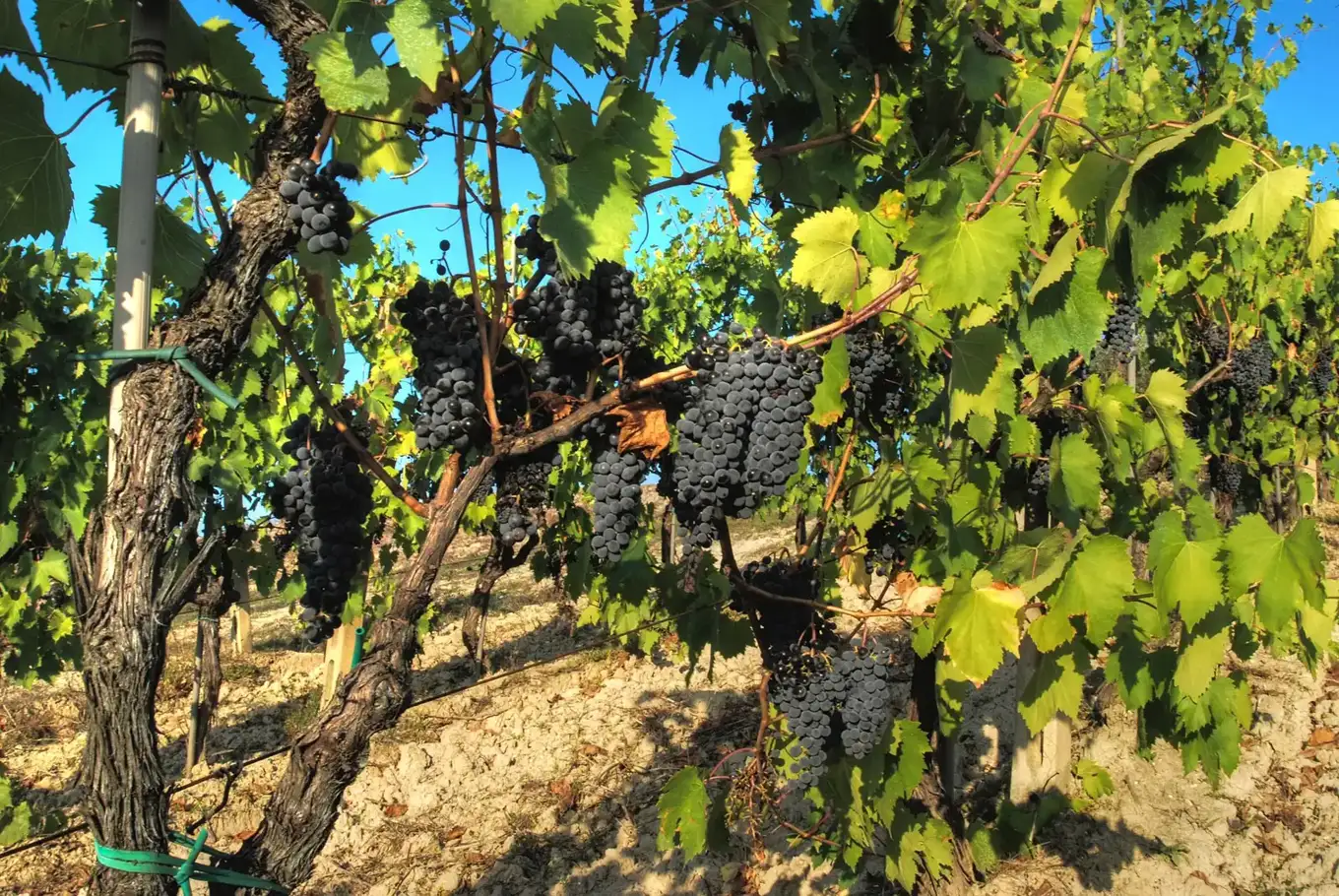
Sangiovese grapes ripening on the vine near Certaldo. Photo: Francesco Sgroi, CC BY 2.0, via Wikimedia Commons
The numbers behind the label
Wine Folly lists the minimums as 24 months of ageing with at least 3 months in bottle, a minimum alcohol of 12.5% and a minimum extract of 25 g/L. Santa Margherita states 13.5% vol for its Riserva, after two years in French oak plus three months in bottle, from a predominantly Sangiovese blend with Merlot and Cabernet Sauvignon fermented in two stages.
If you compare bottles after the trip, use the ageing rule as your checklist. Gran Selezione sits above Riserva with its 90% Sangiovese floor and 30-month minimum.
| Requirement | Chianti Classico Riserva |
|---|---|
| Sangiovese share | At least 80% |
| Total ageing | Minimum 24 months |
| Bottle refinement | At least 3 months of the 24 |
| Minimum alcohol | 12.5% |
| Minimum extract | 25 g/L |
Source: Chianti Classico Consortium.
What are the tasting notes and best food pairings?
Expect cherry, fig, baking spices, leather and vanilla with high acidity and tannins, served at 61 to 65 F alongside grilled steak, game, rich pasta sauces and aged cheeses.
The wine is built for meat and cheese. Tours with food put it next to Tuscan cold cuts and pasta.
What to eat with your tasting
Wine Folly pairs the wine with grilled beef steak, game meats, rich pasta sauces and aged cheeses. The Guinigi producer notes add meat-based pasta, chicken parmesan, venison, wild boar and seasoned pecorino. Santa Margherita suggests tomato-based sauces, pork or beef roasts, game meats and mature cheeses.
Serve it at 61 to 65 F. The Tuscan wineries tour with lunch serves a light lunch with cold cuts, cheeses, bruschetta, pasta and dessert, and the half-day tour at $99 pours with cheese, salami, cold cuts and bruschetta but no meal.
| Element | What the sources say |
|---|---|
| Aromas | Cherry, fig, baking spices, leather, vanilla, and for some bottles blackberry, dried dark cherry, plum and menthol |
| Structure | High acidity and tannins |
| Serve at | 61 to 65 F |
| Pair with | Grilled beef steak, game meats, wild boar, rich pasta sauces, aged and seasoned cheeses |
Tours That Fit
Chianti Classico tours from Florence, led by the one that lists Riserva in its tastings.
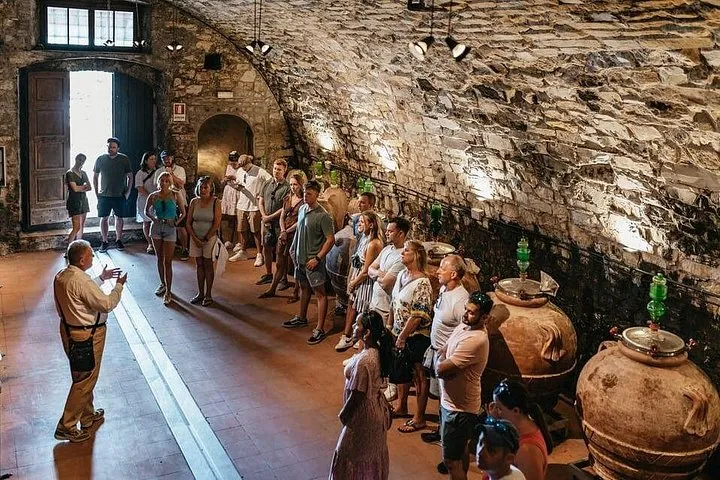
Prestige Rent Small-Group Tuscan Wineries Tour with Olive Oil and Lunch
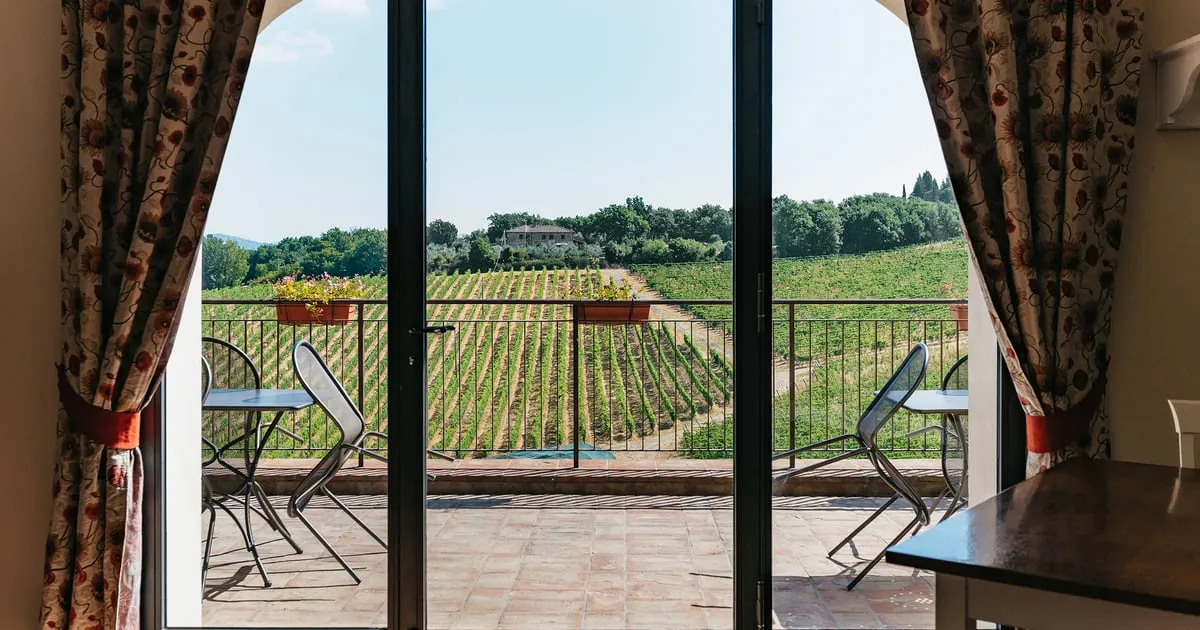
Three family wine estates and a stop in Greve in Chianti, with a Tuscan light lunch paired with Chianti Classico, Riserva and Super Tuscan wines. A two-winery dinner departure at 2:30pm is also listed.
- Category
- Full-day winery tour
- Cancellation
- Free cancellation 24h
- Operator
- Prestige Rent
Prestige Rent Small-Group Wine Tasting Tour to Chianti from Florence
Two Chianti Classico wine estates in 4.5 hours, with a cellar tour at each and wines and olive oils poured with cheese, salami and bruschetta. A semi-private option for up to 8 guests is listed.
- Category
- Half-day Chianti wine tour
- Cancellation
- Free cancellation 24h
- Operator
- Prestige Rent
Walkabout Florence Tours Small-Group Chianti Wine Safari with Lunch
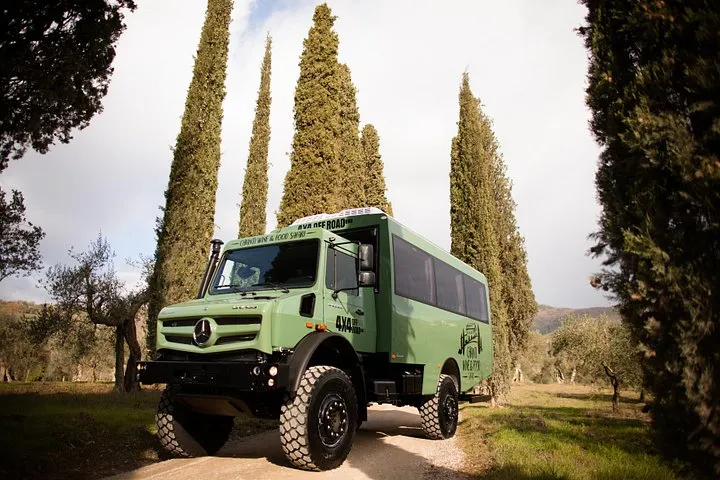
A half-day 4x4 wine safari into Chianti Classico: an off-road drive through vineyards, a family winery visit with a guided tasting, then a Tuscan lunch. A nine-hour option adds a second winery.
- Category
- Half-day Chianti wine tour
- Cancellation
- Free cancellation 24h
- Operator
- Walkabout Florence Tours
Ciaoflorence Chianti Wineries Tour with Wine Tasting from Florence
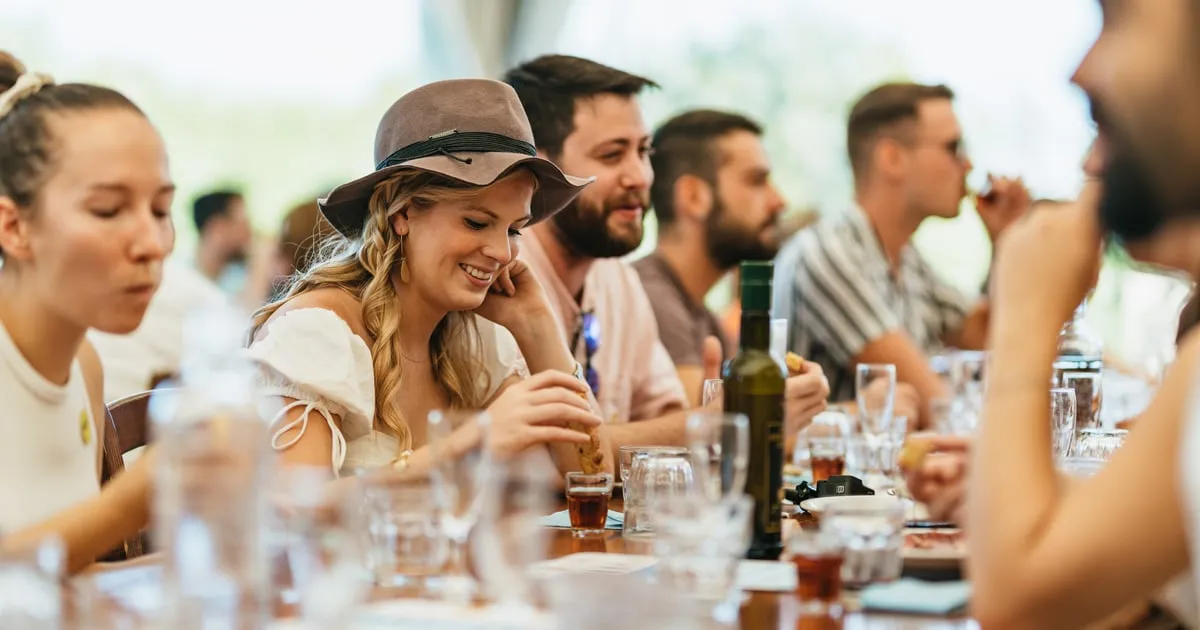
A coach to two Chianti wineries, each with a guided tour and a tasting of 3 or 4 wines with bread, olive oil, balsamic vinegar and salami. Lunch and hotel pickup are not included.
- Category
- Half-day Chianti wine tour
- Cancellation
- Free cancellation 24h
- Operator
- Ciaoflorence Tours & Travel
Which wine tours from Florence let you taste Chianti Classico Riserva?
The Tuscan wineries tour with lunch lists Riserva in its tastings, and the other Chianti Classico tours from Florence pour the zone's wines, so ask for the Riserva at the cellar.
The tours below taste in the Chianti Classico zone and return to Florence the same day.
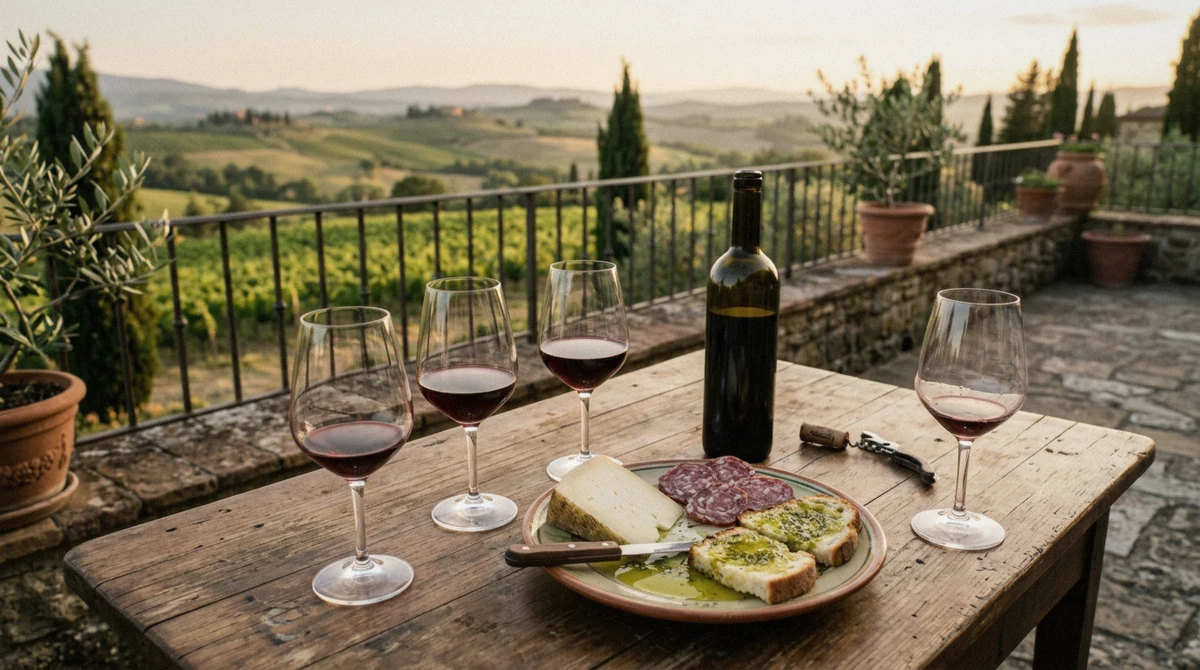
A tasting table with wine and local cheese on a Tuscan terrace. Illustrative image.
Your options at a glance
The table compares the Chianti Classico tours from Florence, with price, length and what each listing says is poured. The Prestige Rent Tuscan wineries tour with lunch is the one that names Riserva: Chianti Classico, Riserva and Super Tuscans with olive oil at 3 wineries on the lunch option. The half-day wine tour from Florence pours 3 wines and olive oil at the first estate and more at the second in 4.5 hours. The Chianti wineries tour is the budget pick at 2 wineries. The wine safari Florence tastes Chianti Classico at a family-owned organic winery with lunch.
All four carry free cancellation 24 hours ahead and none includes hotel pickup on its standard option. If you would rather ride, the Chianti bike tour tastes wine at a Tuscan villa in the Chianti Colli Fiorentini area.
| Tour | Price | Length | What is poured |
|---|---|---|---|
| Tuscan wineries tour with lunch | $168.20 | 8 hours | Chianti Classico, Riserva, Super Tuscans |
| Half-day wine tour from Florence | $99 | 4.5 hours | Chianti reds, olive oil, 2 estates |
| Chianti wineries tour | $55 | 5 to 6.5 hours | 3-4 wines, then up to 3 more |
| Wine safari Florence | $117.40 | 6 to 7 hours or 9 hours | Chianti Classico at an organic winery |
Source: Chianti Classico Consortium.
Map of the Chianti Classico Zone
Chianti Classico Riserva is made only inside this zone between Florence and Siena. The pins are the towns and the castle this guide names.
- 1 San Casciano in Val di PesaNorthern edge of the zone.
- 2 Greve in ChiantiWhole territory inside the zone.
- 3 Castellina in ChiantiWhole territory inside the zone.
- 4 Radda in ChiantiThe consortium was founded here in 1924.
- 5 Gaiole in ChiantiWhole territory inside the zone.
- 6 Brolio CastleThe Ricasoli castle.
- 7 SienaThe zone runs down to the hills above the city.
Numbers match the pins on the map.
Map data: OpenStreetMap.
When is the best time to tour the Chianti Classico zone?
The harvest in Chianti Classico runs from the first half of September to the second half of October, and that window is the liveliest time to visit a cellar.
Any month works for a tasting. Harvest months add activity you cannot see the rest of the year.
Plan around the vineyard calendar
The consortium states the harvest runs from the first half of September to the second half of October, depending on location and altitude. Book a tour in that window to see the cellars at work, and book early because tasting days fill.
If you want to compare Sangiovese styles beyond Chianti, the Brunello wine tour covers Montalcino and Montepulciano in 10.5 hours, and Brunello must age at least two years in oak and at least 4 months in bottle, or 6 months for the Riserva.
Sources: Chianti Classico Consortium, Brunello di Montalcino Consortium.
Can you buy a Riserva at the winery and take it home?
Yes, cellars sell the wines you taste, and if you fly home to the United States you can carry one liter of alcohol duty free if you are at least 21.
Cellars sell the wines you taste. The rules for flying them home are simple.
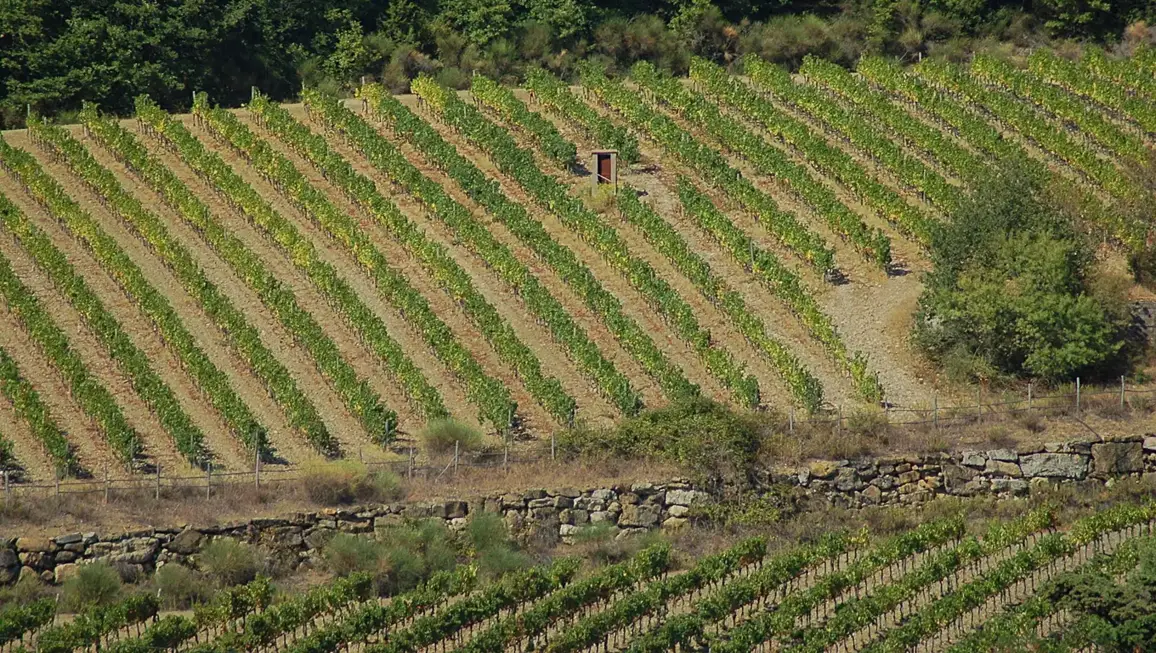
Terraced vineyard rows in a Chianti Classico valley. Photo: Tom Chance, CC BY-SA 2.0, via Wikimedia Commons
Flying bottles home
US CBP allows one American liter, 33.8 fl. oz., of alcohol in the returning resident personal exemption if you are at least 21 and it is for personal use. Amounts above the duty-free liter are dutiable, some states allow more than one liter, and CBP enforces stricter state alcohol laws.
Remember the liquid rules. TSA allows carry-on liquids only in containers of 3.4 ounces or less in one quart-sized bag, so wine goes in your checked baggage, well wrapped.
Driving out on your own? Historic city centres in Italy often require a pass and you can be fined for driving past a ZTL sign without one, and car hire companies may set a higher minimum age and require an International Driving Permit. A guided tour from Florence skips all of that.
Sources: US Customs and Border Protection, TSA, UK Foreign Office.
How do you spot a real Chianti Classico Riserva on a label?
Look for the words Chianti Classico Riserva, the DOCG mention and the Black Rooster mark, which must appear on the main label, neck label or back label of every bottle.
Two marks separate the real thing from lookalike Chianti. Both are easy to learn in one tasting.
The Black Rooster and the DOCG stripe
Since 2013 the Black Rooster must appear on the main label, neck label or back label of a Chianti Classico bottle. The consortium itself is old. On 14 May 1924, 33 wine growers founded the Chianti Classico consortium in Radda, described as the first wine producers' consortium established in Italy. Chianti Classico received DOC status in 1967 and was upgraded to DOCG in 1984.
Since 2006 Chianti Classico can be made exclusively with red grape varieties. If the bottle says only Chianti without Classico, it comes from one of the eight subzones of the wider Chianti DOCG, founded by a consortium in 1927. At the cellar, ask the host to show you the Riserva and Gran Selezione side by side so you can read both labels before you buy.
Source: Chianti Consortium.
Chianti Classico Riserva FAQ
What is the alcohol content of Chianti Classico Riserva?
The legal minimum is 12.5%, and Santa Margherita lists 13.5% vol for its Riserva. See the rules behind the label.
What does Chianti Classico Riserva cost?
Bottle prices vary by producer and vintage, so check at the cellar. A tasting day that pours Riserva costs $168.20 per person on the Tuscan wineries tour with lunch, lunch included.
Is there a Chianti Classico Riserva at Costco?
Store stock changes, so check the label for the words Chianti Classico Riserva, the DOCG mention and the Black Rooster. See how to spot a real Riserva.
What is the difference between Riserva and Gran Selezione?
Gran Selezione needs at least 90% Sangiovese and 30 months of ageing from estate-owned grapes, while Riserva needs 80% Sangiovese and 24 months. See the three levels side by side.
Can Chianti Classico Riserva age?
Yes. The style can mature over several years, and one producer lists an ageing potential of 6 to 8 years. Read whether it is good.
What temperature should you serve it at?
Santa Margherita recommends 61 to 65 F for its Chianti Classico Riserva. See the tasting notes and pairings.
Is Riserva worth it on a wine tour from Florence?
Yes. Tasting the Riserva next to the estate's Chianti Classico shows what 12 extra months of ageing do to Sangiovese, and the 8-hour Tuscan wineries tour with lunch pours both.
More Guides
- Greve in Chianti: Wine Tastings and Getting There from Florence
Greve in Chianti sits 30 km from Florence with tastings at Verrazzano, Montefioralle and more. Plan your wine day for 2027 here.
- Brunello Di Montalcino Wineries: Visiting Montalcino on a Wine Tour from Florence
Visit Brunello di Montalcino wineries from Florence in 2027: cellar tastings, Montalcino town and the Val d'Orcia. Compare the day tours.
- Chianti vs Chianti Classico: What Is the Difference on a Florence Wine Tour?
Chianti vs Chianti Classico in 2027: two DOCGs, 80% vs 70% Sangiovese, 3 ageing levels. Learn the label, then book a Chianti tasting.