 Winery Tours Florence
Home › Guides › Chianti vs Chianti Classico: What Is the Difference on a Florence Wine Tour?
Chianti vs Chianti Classico: What Is the Difference on a Florence Wine Tour?
In the Chianti vs Chianti Classico choice, Chianti Classico suits the wine traveller who wants the historic hills between Florence and Siena and a stricter wine with at least 80% Sangiovese, while Chianti suits anyone happy with a wider, more relaxed appellation that allows 70% Sangiovese. This guide compares the two zones, grapes, ageing levels and labels, then shows which tastings on a winery tour from Florence put each wine in your glass.
Quick answer Two appellations, two grape rules and one rooster on the label
Chianti and Chianti Classico are two separate DOCGs, and Chianti Classico needs at least 80% Sangiovese against 70% for Chianti. Chianti Classico comes only from the historic zone between Florence and Siena and carries the Black Rooster on every bottle.
Key takeaways
- Taste both in one afternoon on the Half Day Wine Tour From Florence, 4.5 hours in a small group
- On a budget? The Chianti Wineries Tour starts from $55 per person
- Want Riserva with lunch? The Wine Safari Florence adds a meal at the winery
- Compare every winery tours from Florence option before you choose a day
What is the difference between Chianti and Chianti Classico?
Chianti Classico is an independent appellation from the original zone between Florence and Siena with stricter rules, while Chianti is a wider DOCG made outside that historic district.
Chianti Classico is not a subzone of Chianti. It is its own DOCG, identified by the Black Rooster logo. The table puts the two side by side for your tasting.
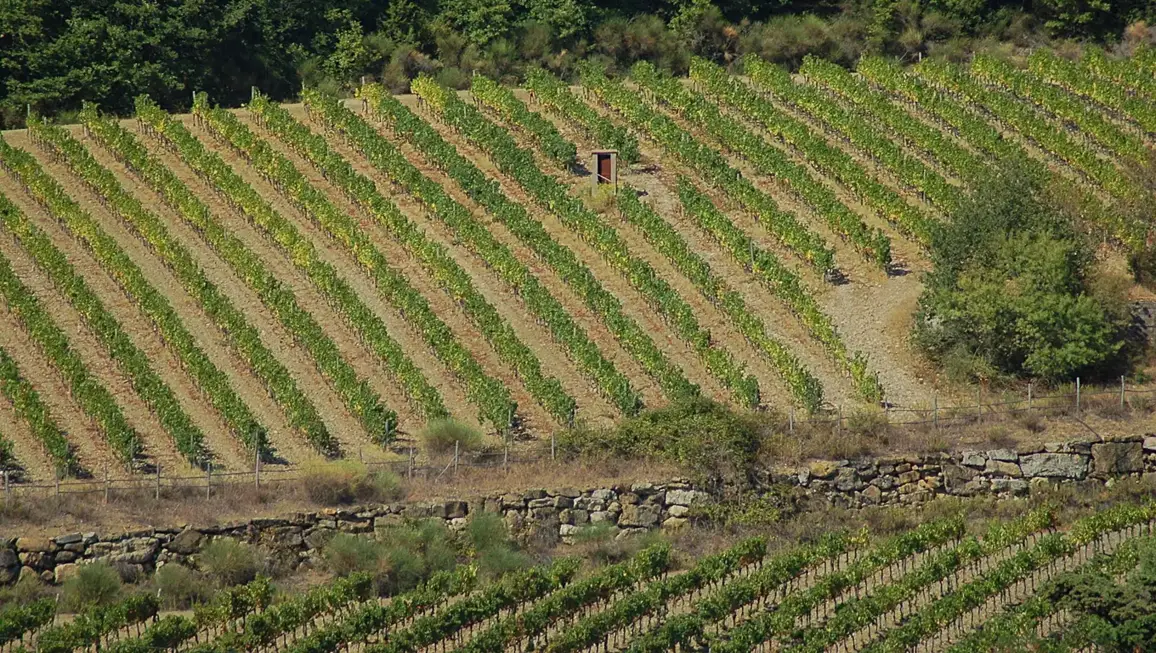
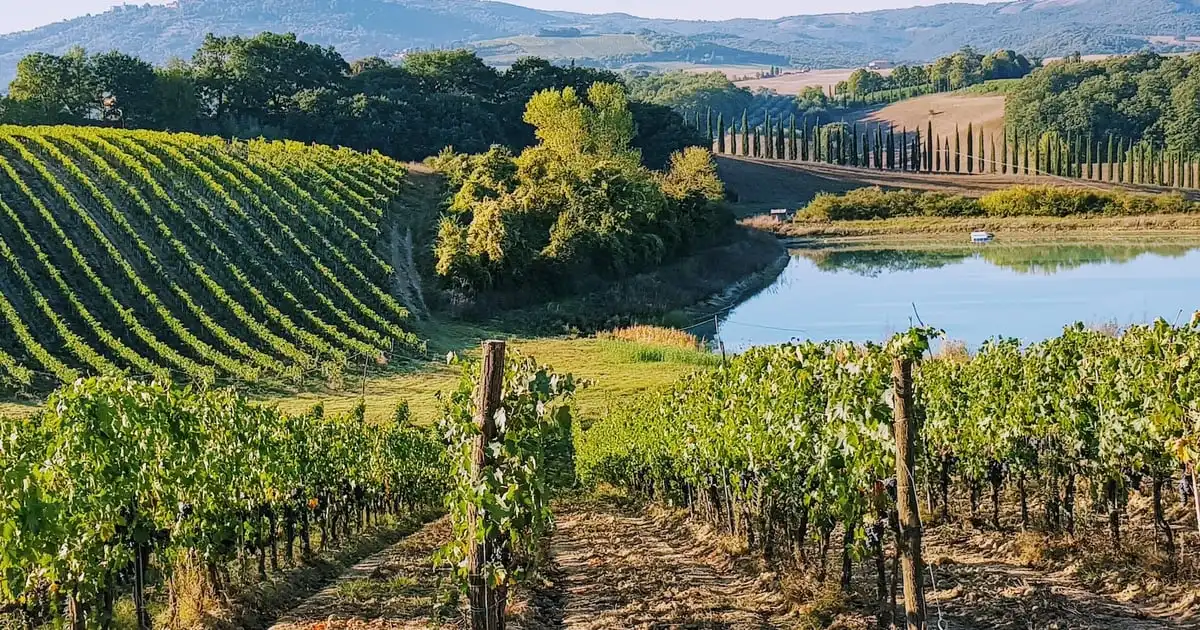
Terraced vineyard rows in a Chianti Classico valley. Photo: Tom Chance, CC BY-SA 2.0, via Wikimedia Commons
Chianti and Chianti Classico compared
The rows below come from the two consortia and from Tuscan tourism and producer guides. Read the last rows first if you only want to know what changes on a wine day from Florence.
| Point | Chianti DOCG | Chianti Classico DOCG |
|---|---|---|
| Where it grows | Outside the historic district, in eight subzones | The historic district between Florence and Siena |
| Sangiovese minimum | 70% to 100% | 80% to 100% |
| Other grapes | No more than 10% white grapes, up to 15% Cabernet Franc and Cabernet Sauvignon | Red grapes only, such as Canaiolo, Colorino, Cabernet Sauvignon and Merlot |
| Vineyard area | Roughly 15,500 hectares | Around 6,800 hectares, at 250 to 600 meters |
| Label mark | No Black Rooster | Black Rooster on every bottle |
| Ageing levels | Normale or riserva | Annata, Riserva and Gran Selezione |
| Near Florence | Colli Fiorentini and Rufina hills | Greve, Radda, Gaiole, Castellina, San Casciano Val di Pesa |
| Who it suits | A short trip into the hills next to Florence | Travellers chasing structure and age-worthy reds |
Source: Chianti Consortium.
What makes a wine Chianti Classico?
It must come from the historic zone between Florence and Siena, use at least 80% Sangiovese with only red grapes, and carry the Black Rooster.
Chianti Classico is the older name with the tighter rulebook. The rules show up in the glass.
The zone and its villages
The Chianti Classico production zone covers 71,800 hectares shared between the provinces of Florence and Siena. The whole territories of Castellina in Chianti, Gaiole in Chianti, Greve in Chianti and Radda in Chianti lie inside it, with parts of Barberino Tavarnelle, Castelnuovo Berardenga, Poggibonsi and San Casciano Val di Pesa.
For a traveller in Florence, this is the wine country closest to the south of the city. Greve, Radda, Gaiole, Castellina, San Casciano Val di Pesa and Tavarnelle Val di Pesa are the Chianti Classico communes you can reach from Florence in a day.
Grapes, yields and taste
Chianti Classico can be made with a minimum of 80% Sangiovese and a maximum of 20% other red varieties. Since 2006 it can be made exclusively with red grapes, so no white grapes go in. The Black Rooster rules also set a lower yield per hectare and a longer minimum ageing period than plain Chianti.
The grapes usually grow higher up, at 250 to 600 meters. Wine Enthusiast notes that this elevation gives Chianti Classico its violet and spice flavours.
Sources: Chianti Classico Consortium, Chianti Classico Consortium.
What makes a wine Chianti DOCG?
It is made outside the historic district with 70% to 100% Sangiovese, in one of the subzones that ring Florence, Siena, Arezzo and Pisa.
Chianti DOCG is the bigger family. It covers the hills between Florence and Siena, Arezzo and Pisa, outside the Classico core.
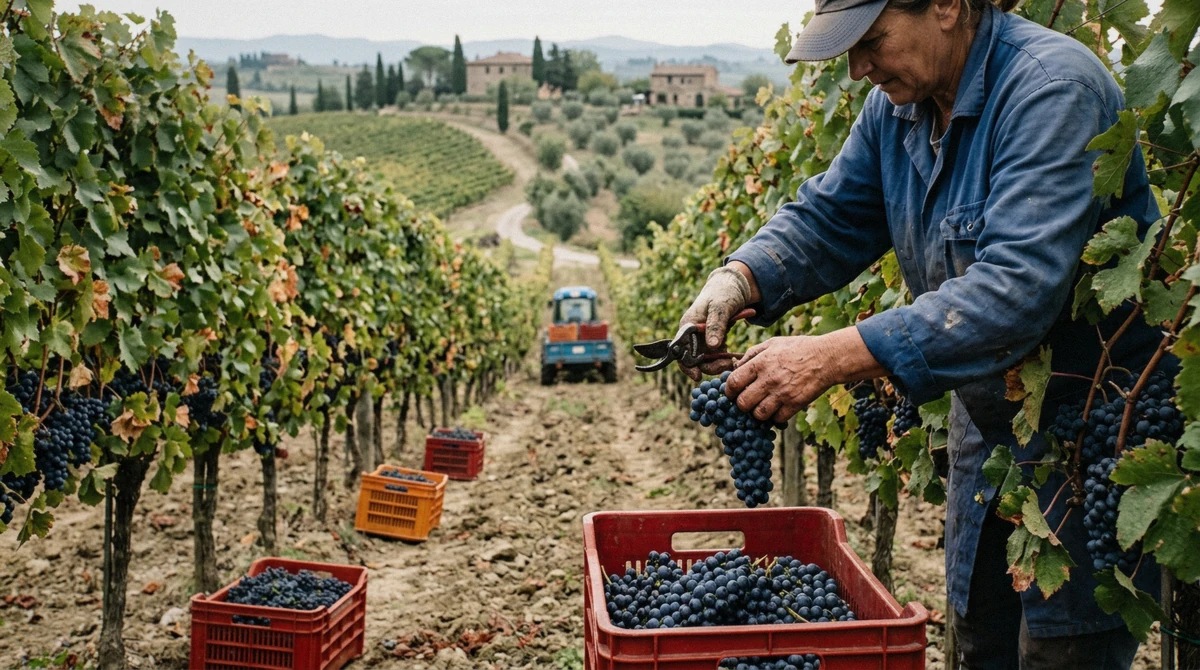
Picking grapes into crates during the harvest. Illustrative image.
Eight subzones, two of them next to Florence
The Chianti consortium lists eight subzones: Colli Aretini, Colli Fiorentini, Colli Senesi, Colline Pisane, Montalbano, Montespertoli, Rufina and Terre di Vinci. Each can be made as normale or riserva. Colli Fiorentini and Rufina are the ones closest to Florence, so a short wine outing from the city often lands in Chianti DOCG country.
The blend is more open. Chianti uses 70% to 100% Sangiovese, may include no more than 10% white grapes and a maximum of 15% Cabernet Franc and Cabernet Sauvignon.
The Consorzio del Vino Chianti was founded in 1927 by a group of winegrowers.
Sources: Chianti Consortium, Chianti Consortium, Italian National Tourist Board.
Map: Chianti Classico Towns and the Chianti Hills Near Florence
Green pins sit in the Chianti Classico zone between Florence and Siena. Violet pins are Chianti DOCG country outside it: the Colli Fiorentini and Rufina hills next to Florence.
- 1 San Casciano in Val di PesaChianti Classico.
- 2 Greve in ChiantiChianti Classico.
- 3 MontefioralleChianti Classico, above Greve.
- 4 Castellina in ChiantiChianti Classico.
- 5 Radda in ChiantiChianti Classico.
- 6 Gaiole in ChiantiChianti Classico.
- 7 RufinaChianti Rufina subzone, east of Florence.
- 8 ImprunetaColli Fiorentini hills south of Florence.
Numbers match the pins on the map.
Map data: OpenStreetMap.
What are the three levels of Chianti?
Chianti Classico has three levels: Annata with at least 12 months of ageing, Riserva with at least 24 months and Gran Selezione with at least 30 months.
These levels belong to Chianti Classico. Plain Chianti comes as normale or riserva.
Annata, Riserva and Gran Selezione
The consortium rules set the minimums below. Gran Selezione was introduced in 2014 and comes from estate-owned grapes only, either a single vineyard or a selection of the best grapes. Eleven UGAs, village names such as Radda, Gaiole, Greve and Lamole, may appear on Gran Selezione labels.
On a cellar visit, ask for the Annata and the Riserva of the same estate side by side.
| Level | Sangiovese | Minimum ageing | Grapes |
|---|---|---|---|
| Annata | At least 80% | 12 months | Grapes from the zone |
| Riserva | At least 80% | 24 months, of which 3 months in bottle | Grapes from the zone |
| Gran Selezione | At least 90% | 30 months, of which 3 months in bottle | Estate-owned grapes only |
Source: Chianti Classico Consortium.
Tours That Fit
These Chianti wine days from Florence let you taste the difference at the cellar.
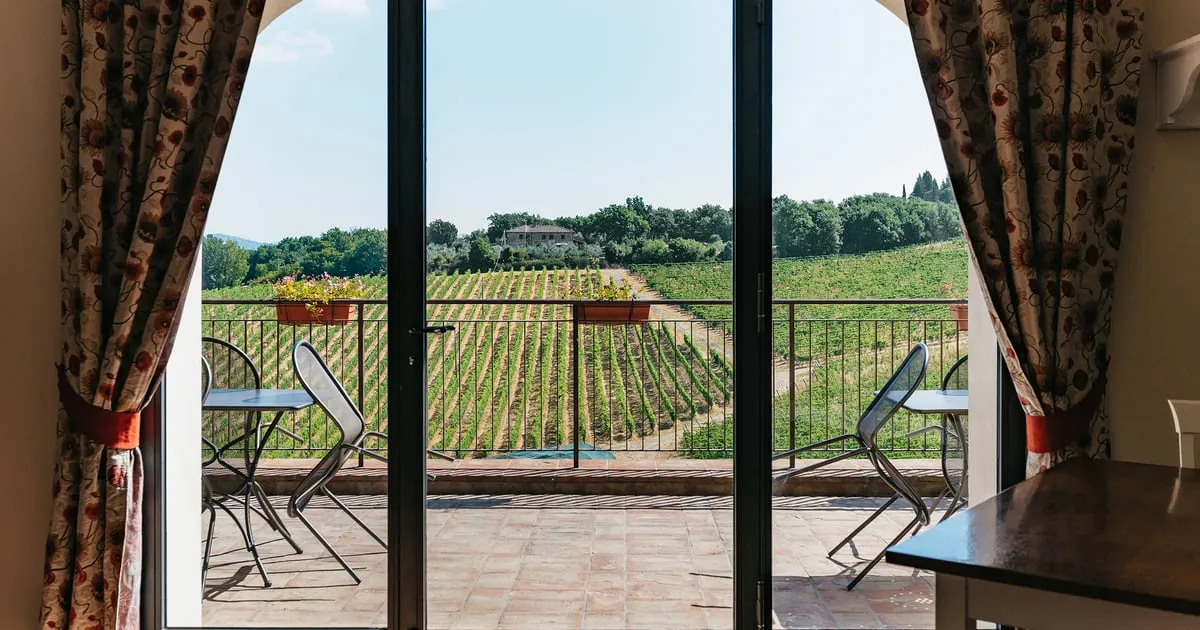
Prestige Rent Small-Group Wine Tasting Tour to Chianti from Florence
Two Chianti Classico wine estates in 4.5 hours, with a cellar tour at each and wines and olive oils poured with cheese, salami and bruschetta. A semi-private option for up to 8 guests is listed.
- Category
- Half-day Chianti wine tour
- Cancellation
- Free cancellation 24h
- Operator
- Prestige Rent
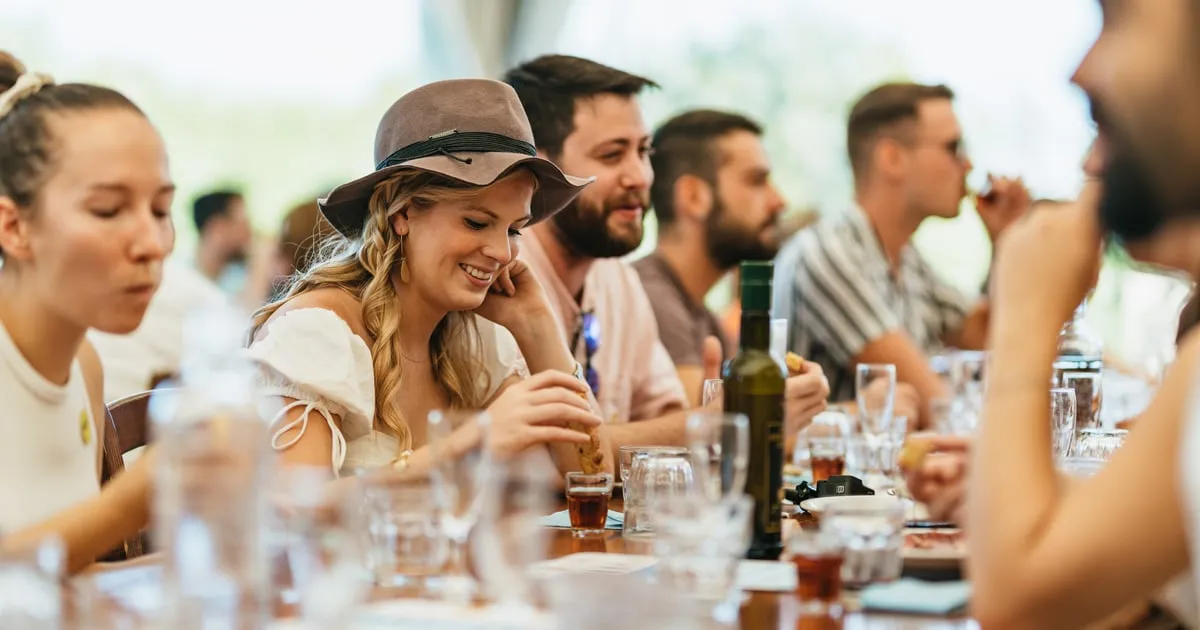
Ciaoflorence Chianti Wineries Tour with Wine Tasting from Florence
A coach to two Chianti wineries, each with a guided tour and a tasting of 3 or 4 wines with bread, olive oil, balsamic vinegar and salami. Lunch and hotel pickup are not included.
- Category
- Half-day Chianti wine tour
- Cancellation
- Free cancellation 24h
- Operator
- Ciaoflorence Tours & Travel
ACCORD Italy Smart Tours Chianti Sunset Wine Tasting Tour from Florence
Two Chianti family estates with a cellar tour and six wine tastings as the sun goes down, in a car or a 7-8 seater minivan. Cheese with jam and bruschetta are served, and a dinner option is listed.
- Category
- Half-day Chianti wine tour
- Cancellation
- Free cancellation 24h
- Operator
- ACCORD Italy Smart Tours
Is Chianti Classico better than Chianti?
Chianti Classico is the stricter wine, with more Sangiovese, lower yields and longer ageing, but a good Chianti from Rufina or Colli Fiorentini can suit a lunch table just as well.
Better depends on what you want in the glass. Stricter rules raise the floor, not the ceiling.
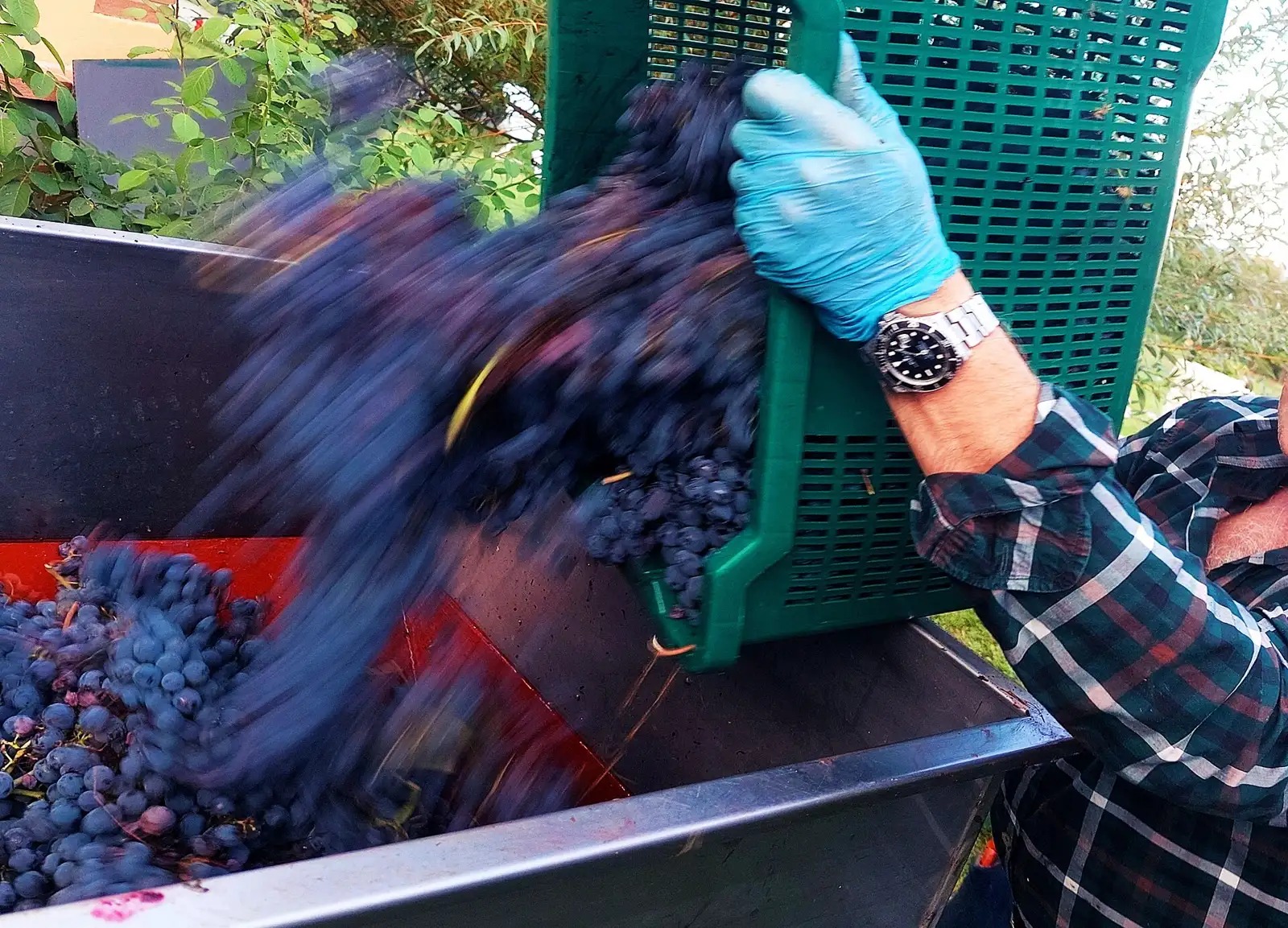
Dark grapes tipped from a harvest crate during the vendemmia, the grape harvest. Photo: Anna.Massini, CC BY 4.0, via Wikimedia Commons
When each one wins
Pick Chianti Classico when you want depth and a wine that ages. The Black Rooster rules demand a lower yield per hectare and a longer minimum ageing period, and the grapes grow higher, which brings violet and spice.
Pick Chianti when you want a first tasting close to the city. The wider blend rules give winemakers room, and the Colli Fiorentini and Rufina subzones sit just outside Florence.
On a wine tour, the fair test is your own palate. The Chianti Sunset Wine Tour runs 5 to 7 hours from $143 per person and ends with the evening light over the vines.
Source: Chianti Consortium.
Which Chianti wine is considered the best?
Chianti Classico Gran Selezione sits at the top, with at least 90% Sangiovese, estate-owned grapes and a minimum of 30 months of ageing.
The ranking is written into the rules. Each step up asks for more Sangiovese, more time or better grapes.
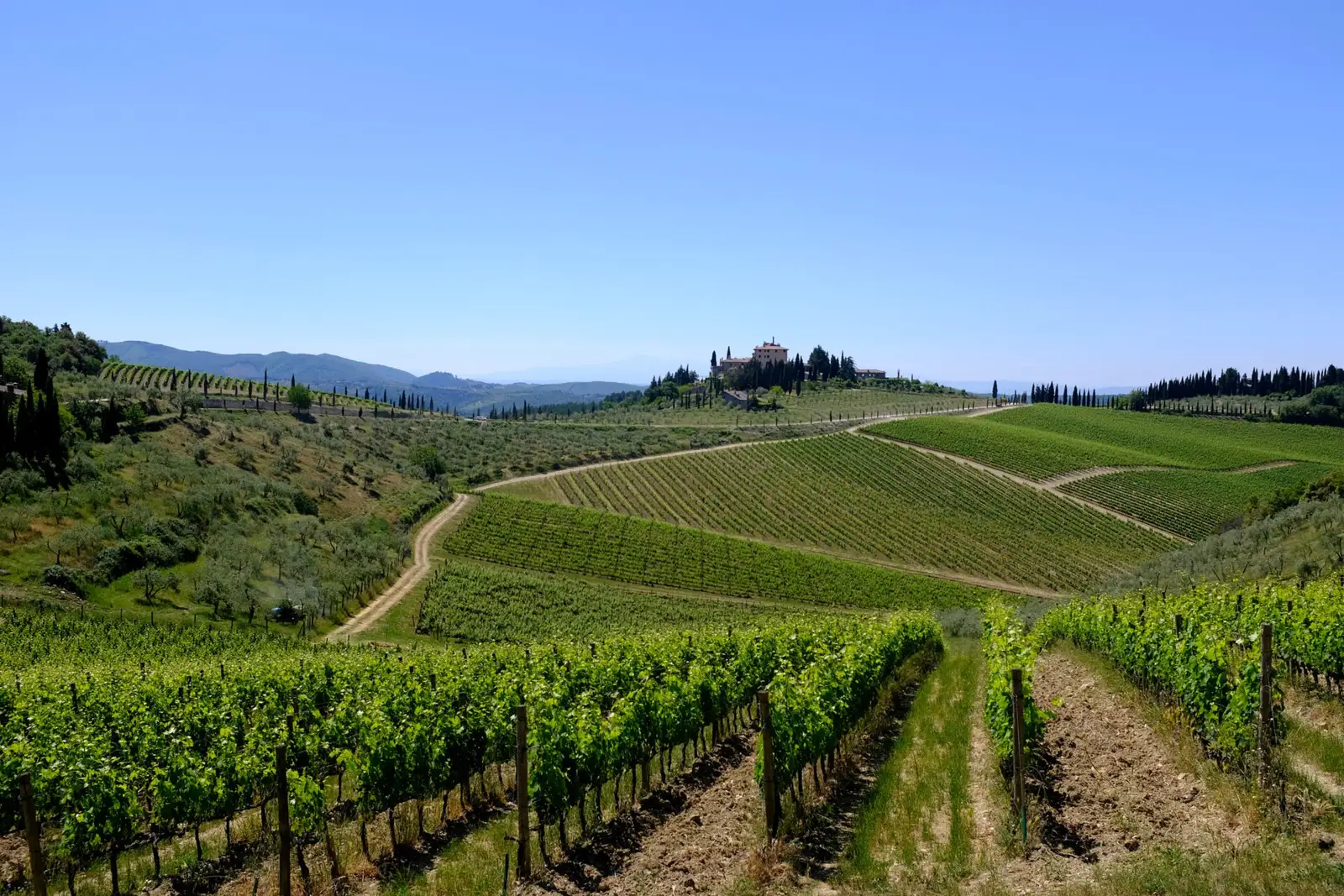
Vineyard rows and a hilltop farm in the Chianti Classico area. Photo: Davide Taviani, CC BY 3.0, via Wikimedia Commons
Climbing the ladder
Gran Selezione needs at least 90% Sangiovese, with the rest only indigenous red grapes, and 30 months of ageing including 3 months in bottle. Riserva follows with at least 24 months. Annata is the everyday Chianti Classico with at least 12 months.
Both families also make a sweet wine. Vin Santo del Chianti Doc and Vin Santo del Chianti Classico Doc. Ask whether the estate pours one at the end of the tasting.
The Tuscan Wineries Tour with Lunch gives you 8 hours across Tuscan cellars for $168.20 per person, enough time to ask for an older bottle.
Source: Chianti Classico Consortium.
Why are there two Chianti wines?
The original Chianti zone was defined in 1716, and when the name spread to wider Tuscany a 1932 decree let wine from the original area add the word Classico.
The split is about history, not marketing. The old zone kept its own name.
From the Medici to the Black Rooster
In 1716 Cosimo III, Grand Duke of Tuscany, defined the Chianti territory, about 70000 hectares stretching between Florence and Siena. The same Bando Mediceo defined four areas: Chianti, Pomino, Carmignano and Val d'Arno di Sopra.
As Chianti spread beyond that line, the old zone needed its own name. A 1932 ministerial decree let wine from the 1716 zone use the adjective Classico, and the Black Rooster brand grew from it. Chianti Classico received DOC status in 1967 and was upgraded to DOCG in 1984. The Chianti Classico consortium itself dates to 1924, when 33 wine growers founded it in Radda.
How can you tell a Chianti Classico from a Chianti on the shelf?
Look for the Black Rooster, which must appear on the main label, neck label or back label of every Chianti Classico bottle.
Two bottles can both say Chianti. One small mark tells them apart.
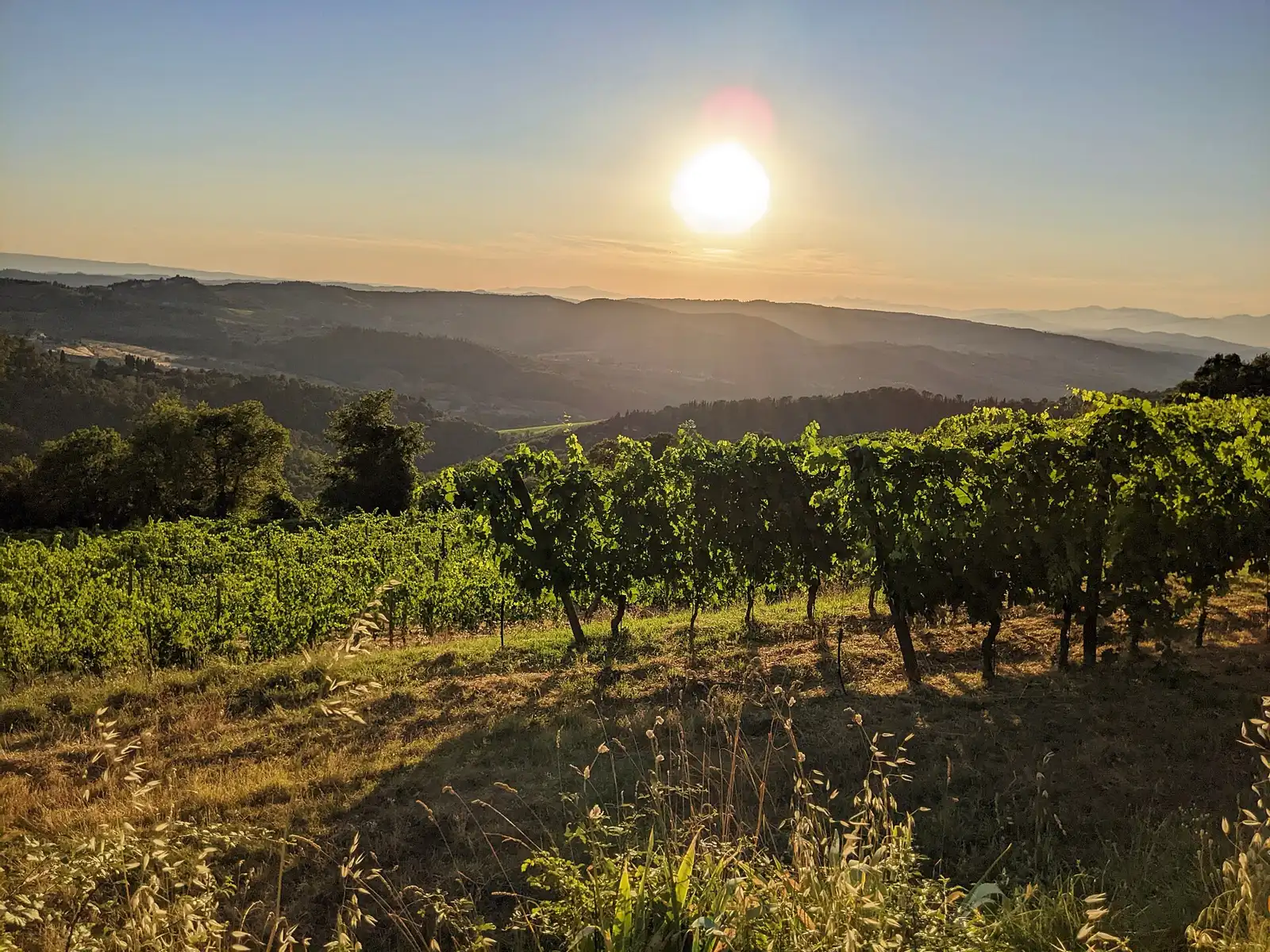
Late sun over a Chianti vineyard. Photo: Julia Borst Brazas, CC BY-SA 4.0, via Wikimedia Commons
Three things to check
First, the Black Rooster. Since 2013 it must appear on the main label, neck label or back label of a Chianti Classico bottle. No rooster on a bottle labelled Chianti means Chianti DOCG.
Second, the words after Chianti. A subzone name such as Rufina or Colli Fiorentini marks Chianti DOCG. The words Riserva or Gran Selezione after Classico tell you the ageing level.
Third, a village name on a Gran Selezione. Radda, Gaiole, Greve and Lamole are among the UGAs that may appear on the label.
Buying bottles to fly home? TSA limits carry-on liquids to containers of 3.4 ounces (100 ml) or less, so wine goes in checked baggage, and US CBP allows returning residents aged 21 or over one liter of alcohol duty free.
Sources: TSA, US Customs and Border Protection.
Which Chianti tasting should you book from Florence?
Book a half day for a quick side-by-side tasting, and a full day with lunch if you want Riserva and Gran Selezione at the cellar.
The tour you pick decides how many wines and levels you taste. Match it to your traveller type.
Pick by traveller type
The table matches common traveller types to a Chianti wine day that leaves Florence. Every tour listed offers free cancellation up to 24 hours before.
The harvest in Chianti Classico runs from the first half of September to the second half of October, depending on location and altitude. Book early for those weeks.
| Traveller | Tour | Time | Price per person |
|---|---|---|---|
| First taste on a budget | Chianti Wineries Tour | 5 to 6.5 hours | $55 |
| Short on time | Half Day Wine Tour From Florence | 4.5 hours | $99 |
| Wine plus a famous town | San Gimignano Wine Tour | 7 hours | $84.66 |
| Lunch at the winery | Wine Safari Florence | 6 to 7 hours, or 9 hours | $117.40 |
| Evening light | Chianti Sunset Wine Tour | 5 to 7 hours | $143 |
| Full day with olive oil | Tuscan Wineries Tour with Lunch | 8 hours | $168.20 |
Source: Chianti Classico Consortium.
Chianti vs Chianti Classico: Questions Answered
What grape is Chianti Classico made from?
Chianti Classico is made from 80% to 100% Sangiovese, with Canaiolo, Colorino, Cabernet Sauvignon and Merlot allowed in the rest. Taste it at the cellar on the Half Day Wine Tour From Florence.
How do Chianti and Chianti Classico taste differently?
Chianti Classico grapes come from higher vineyards, giving violet and spice flavours, while Chianti grows across a wider area outside the historic district. Compare them on the Chianti Wineries Tour.
What is the difference between Chianti Classico and Chianti Riserva?
Chianti Classico Riserva comes from the historic zone and ages at least 24 months, while a Chianti riserva comes from one of the eight Chianti DOCG subzones. The Wine Safari Florence pairs tastings with lunch.
Is Chianti Classico a subzone of Chianti?
No, it is an independent appellation identified by the Black Rooster logo. Find a tasting among the Florence winery tours.
Do both make Vin Santo?
Yes, there is Vin Santo del Chianti Doc and Vin Santo del Chianti Classico Doc. Ask for a glass at the end of the Tuscan Wineries Tour with Lunch.
More Guides
- Greve in Chianti: Wine Tastings and Getting There from Florence
Greve in Chianti sits 30 km from Florence with tastings at Verrazzano, Montefioralle and more. Plan your wine day for 2027 here.
- Brunello Di Montalcino Wineries: Visiting Montalcino on a Wine Tour from Florence
Visit Brunello di Montalcino wineries from Florence in 2027: cellar tastings, Montalcino town and the Val d'Orcia. Compare the day tours.
- What Is Chianti Classico Riserva? A Guide for Wine Tours from Florence
Learn the Riserva ageing rules, taste profile and pairings, then pick the Chianti Classico wine tour from Florence that pours it. Plan your 2027 trip.