 Winery Tours Florence
Home › Guides › Chianti Wine Region: Which Towns and Wineries a Tour from Florence Reaches
Chianti Wine Region: Which Towns and Wineries a Tour from Florence Reaches
The Chianti wine region is the hill area between Florence and Siena, and from Florence the natural gateway is Impruneta, followed by Greve in Chianti, then Radda and Gaiole. This guide covers where Chianti is, which towns and wineries a day tour reaches, what makes the wine special, how Chianti differs from Chianti Classico, and how to visit with kids or without a tour. Guided winery tours from Florence into the region run from $55 per person for 5 to 6.5 hours up to $168.20 for an 8-hour day with lunch.
Quick answer Where Chianti is and how to visit it from Florence in one day
Chianti lies between Florence and Siena, and a guided day tour from Florence costs from $55 per person for 5 to 6.5 hours on the Chianti wineries tour. The 4.5-hour half-day wine tour at $99 visits 2 wineries, and the 8-hour Tuscan wineries tour with lunch at $168.20 lists Greve in Chianti on its route. The tours here meet in Florence, none includes hotel pickup on its standard option.
Key takeaways
- Compare the Chianti wineries tour half-day coach trip
- Chase the light on a Chianti sunset wine tour
- Add two more wineries and San Gimignano with the San Gimignano wine tour
- Pedal between cellars on a Chianti bike tour
Where is the Chianti wine region?
Chianti is the hill area between Florence and Siena, stretching east toward the Valdarno and west toward the Val d'Elsa.
Florence is the natural starting point for the Chianti wine region. The wider wine zone reaches toward Arezzo, Pistoia and Montepulciano, but a day trip stays in the hills between Florence and Siena.
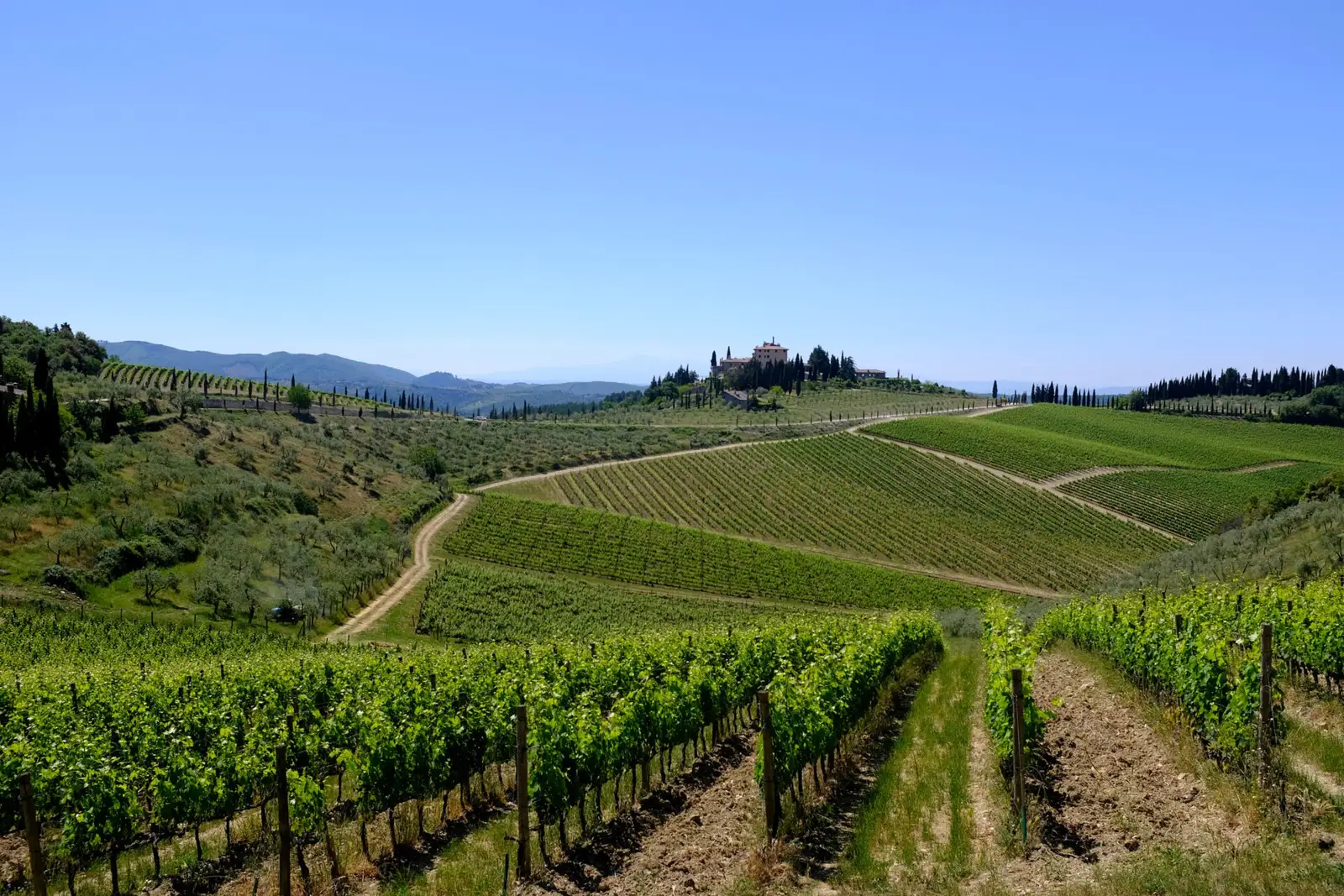
Vineyard rows and a hilltop farm in the Chianti Classico area. Photo: Davide Taviani, CC BY 3.0, via Wikimedia Commons
Chianti and Chianti Classico are two different zones
The Chianti Classico production zone covers 71,800 hectares shared between the provinces of Florence and Siena. The whole territories of Castellina in Chianti, Gaiole in Chianti, Greve in Chianti and Radda in Chianti lie inside it, along with parts of Barberino Tavarnelle, Castelnuovo Berardenga, Poggibonsi and San Casciano Val di Pesa.
The wider Chianti DOCG covers approximately 15,500 hectares of vineyards with around 3,000 producers, and has eight subzones: Colli Aretini, Colli Fiorentini, Colli Senesi, Colline Pisane, Montalbano, Montespertoli, Rufina and Terre di Vinci. Most Chianti tours from Florence list the Chianti Classico zone as their region, among them the half-day wine tour and the Chianti wineries tour.
Sources: Chianti Classico Consortium, Italian National Tourist Board.
Which towns in Chianti can a day tour from Florence reach?
A day tour from Florence can reach Impruneta, Greve in Chianti, Panzano, Radda in Chianti, Gaiole in Chianti and Castellina in Chianti, with Greve the town the tour listings name most.
From Florence the towns follow in order: Impruneta first, then Greve, then Radda and Gaiole. Here is what each one gives you on a wine day.
Impruneta, the gateway
From Florence the natural gateway to wine country is Impruneta, with a 13th-century crenellated bell tower and the Basilica of Santa Maria.
Greve in Chianti and Montefioralle
Greve in Chianti has a unique triangular piazza and hosts the most important winemaking festival in Chianti in September. Nearby is the walled village of Montefioralle. The Chianti sunset wine tour lists optional photo stops in Greve and Montefioralle, and the Tuscan wineries tour with lunch lists Greve in Chianti on its route.
Panzano
Panzano is known for Dario Cecchini's butcher shop. The Dario Cecchini tour at $366.88 pairs 2 organic wineries with lunch at Dario Cecchini, steak included, in 7 hours. It is non-refundable, so book it only once your dates are fixed.
Radda in Chianti
Radda has the 14th-century church of San Niccolo and the Praetorian Palace from around 1415, plus Casa Chianti Classico just outside town. Is Radda in Chianti worth visiting? Yes, if you want the quieter hill town and the home of the consortium: 33 wine growers founded the Chianti Classico consortium in Radda in 1924, the first wine producers' consortium established in Italy.
Gaiole in Chianti
Gaiole follows Radda with castles such as San Leonino and Fonterutoli. Its whole territory lies inside the Chianti Classico zone.
Castellina in Chianti
Castellina is one of the four towns whose whole territory lies inside the Chianti Classico zone, with Gaiole, Greve and Radda. The first definition of a Chianti wine area, in 1716, covered Gaiole, Castellina and Radda.
San Gimignano
Some tours trade a second Chianti town for San Gimignano, a town on the UNESCO World Heritage list since 1990. The San Gimignano wine tour at $84.66 runs 7 hours from a 10:00am start with 2 wineries and up to 8 wines, with snacks and no lunch.
Source: Italian National Tourist Board.
Map of the Chianti Wine Region
The towns and estates this guide names, between Florence and Siena. San Gimignano sits west of the Chianti Classico zone.
- 1 ImprunetaHill town on the Florence side.
- 2 Villa Poggio TorselliVilla winery, last stop of the lunch tour.
- 3 Antinori nel Chianti ClassicoAntinori's cellar at Bargino.
- 4 RiseccoliOrganic hilltop winery near Greve.
- 5 Greve in ChiantiMarket town on Piazza Matteotti.
- 6 MontefioralleWalled hamlet above Greve.
- 7 Badia a PassignanoAbbey among the vines.
- 8 Panzano in ChiantiDario Cecchini's butcher shop.
- 9 Castellina in ChiantiChianti Classico town.
- 10 Radda in ChiantiSeat of the 1924 consortium.
- 11 Gaiole in ChiantiChianti Classico town.
- 12 Brolio CastleRicasoli estate near Gaiole.
- 13 San GimignanoTowers and Vernaccia, outside the Classico zone.
Numbers match the pins on the map.
Map data: OpenStreetMap.
Which wineries in Chianti can you visit on a tour from Florence?
Tours from Florence visit family cellars and elegant estates, with names such as Antinori, Ama and Brolio welcoming visitors for tastings.
Wine tasting in the Chianti wine region varies from simple family cellars to elegant estates like Antinori, Ama and Brolio. On a guided day the operator chooses the estates, so pick the tour whose tasting matches what you want.
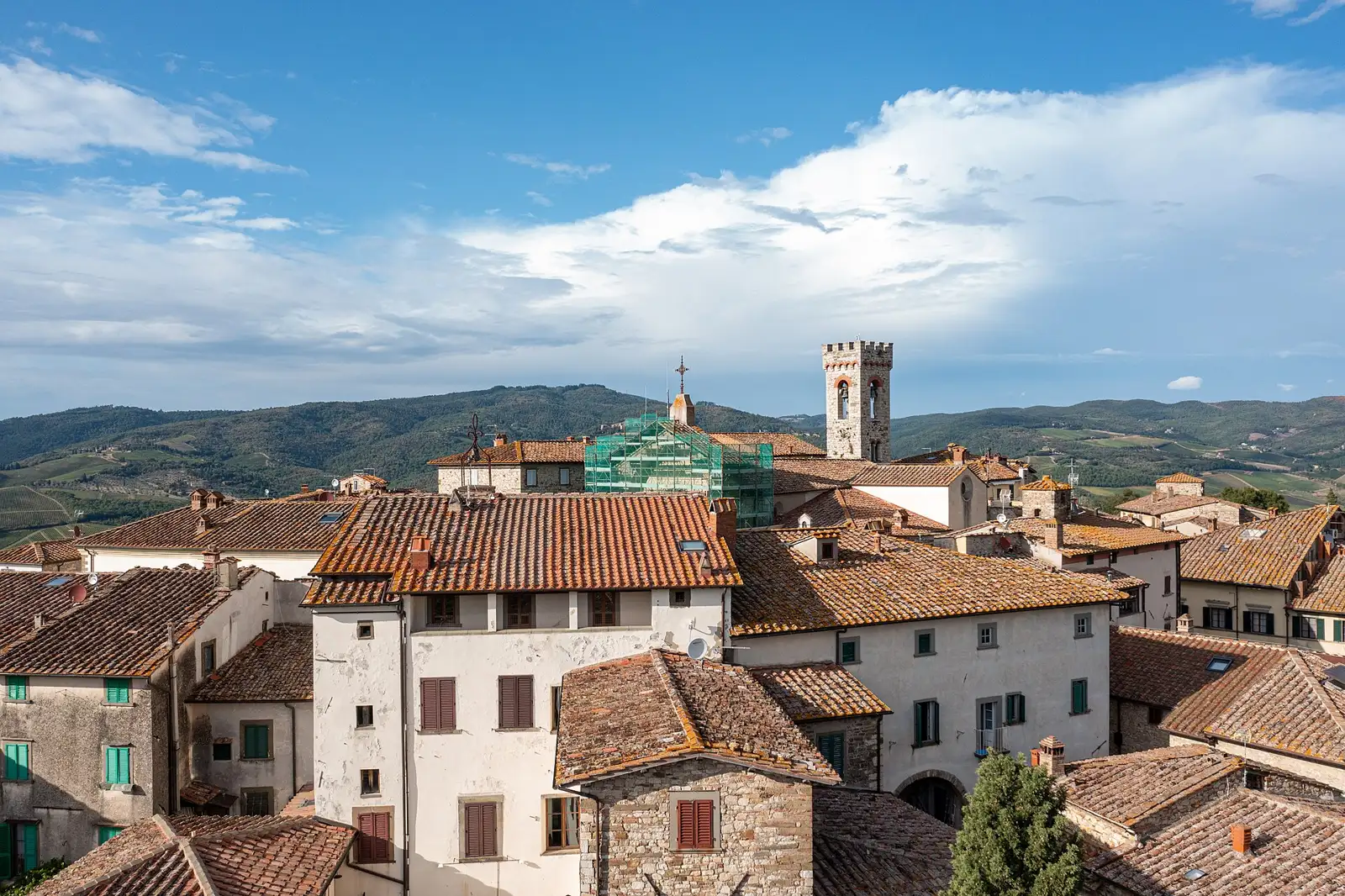
Rooftops of Radda in Chianti, one of the three historic Chianti League towns. Photo: Kasa Fue, CC BY-SA 4.0, via Wikimedia Commons
What a tasting includes
Tastings are often accompanied by Tuscan cheese, ham, olives and more. The half-day wine tour pours with cheese, salami, cold cuts and bruschetta but no meal. Tours with lunch go further: the wine safari Florence serves a traditional Tuscan lunch with homemade pasta, and the Tuscan wineries tour with lunch adds olive oil tasting and a light lunch.
Estate names to look for
Antinori, Ama and Brolio are the elegant end of the scale and welcome visitors for tastings. The tour listings name their own estates: the Tuscan wineries tour with lunch includes Riseccoli and Villa Poggio Torselli, and the wine safari Florence visits a family-owned organic winery.
What is so special about Chianti wine?
Chianti is special because it is a Sangiovese-led red from a defined Tuscan hill zone whose rules go back to the first wine legislation in the area.
The blend is the heart of it. Chianti must be produced with at least 80% Sangiovese grapes, and almost 63 million bottles are produced annually across the zone.
The blend and its history
The classic blend is Sangiovese (75-90%), Canaiolo (5-10%) and Malvasia del Chianti (5-10%), developed by Baron Ricasoli. Since 2006 Chianti Classico can be made exclusively with red grape varieties. Cosimo III de Medici's early eighteenth-century act is believed to be the first legislation governing wine production, and the first definition of a Chianti wine area was made in 1716, covering the villages of Gaiole, Castellina and Radda.
In 1932 the area was redrawn into seven sub-areas: Classico, Colli Aretini, Colli Fiorentini, Colline Pisane, Colli Senesi, Montalbano and Rufina.
Sangiovese across Tuscany
Sangiovese is the grape behind the other great Tuscan reds too: Brunello di Montalcino is made from Sangiovese, called Brunello in Montalcino, and Vino Nobile di Montepulciano must be at least 70% Sangiovese. Since 1995 a Chianti can be made with 100% Sangiovese. To taste the Chianti side, the Chianti wineries tour pours 3-4 Chianti wines at the first winery and up to 3 more at the second.
Sources: Chianti Classico Consortium, Brunello di Montalcino Consortium.
What is the difference between Chianti and Chianti Classico?
Chianti Classico is a separate DOCG between Florence and Siena with stricter requirements, while the larger Chianti DOCG has more variable quality.
Both became DOCG in 1984. Only Chianti Classico may display the black rooster (gallo nero) seal, so look for that bird on the label when you order.
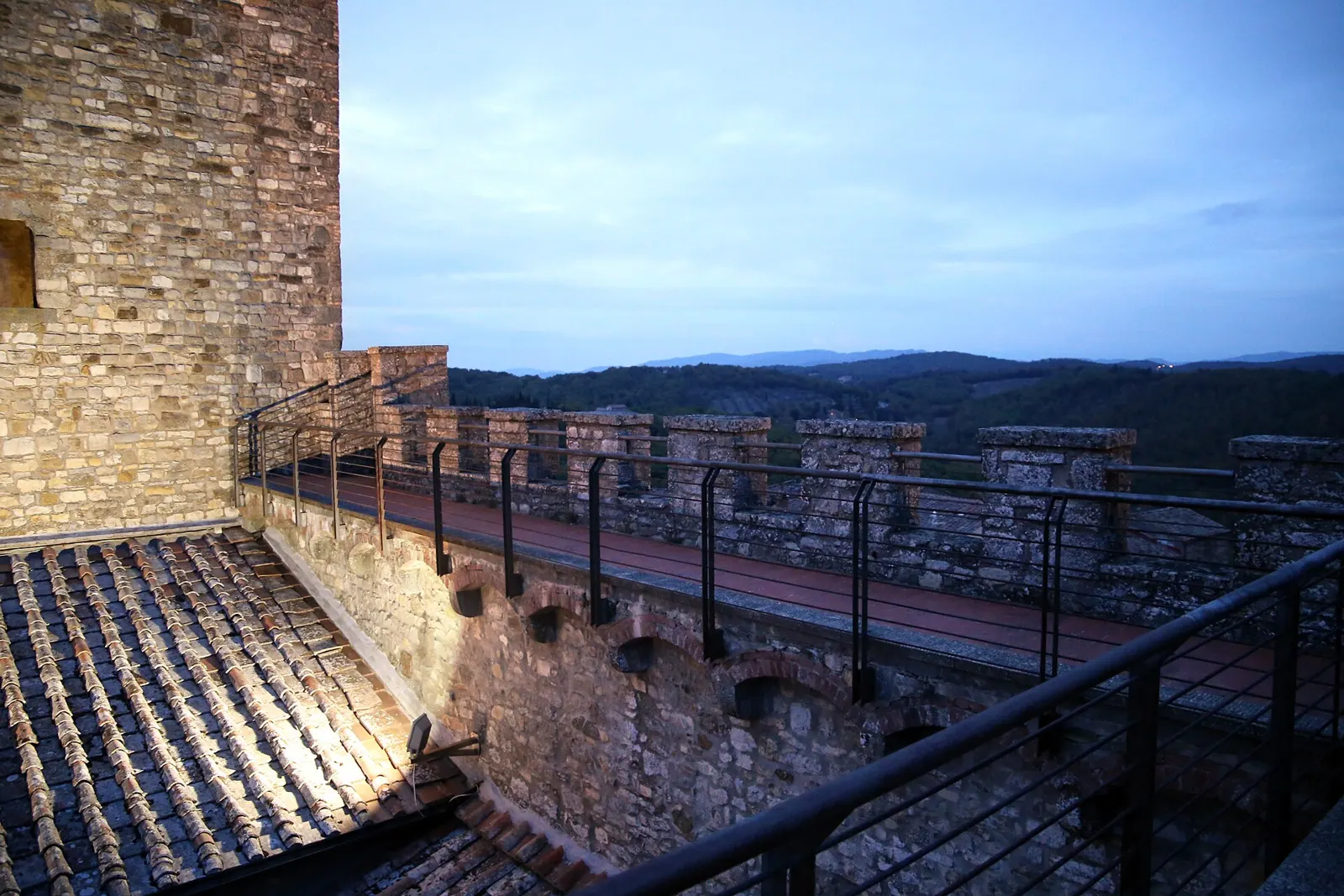
The rocca of Castellina in Chianti, now a museum of the Chianti Classico area. Photo: Sailko, CC BY-SA 4.0, via Wikimedia Commons
The ageing ladder inside Chianti Classico
Chianti Classico Annata needs at least 80% Sangiovese and a minimum of 12 months of ageing. Riserva needs at least 80% Sangiovese and 24 months of ageing, of which 3 months are bottle refinement. Gran Selezione needs at least 90% Sangiovese with the rest indigenous red grapes and a minimum of 30 months of ageing, comes from estate-owned grapes only, and may show an Additional Geographical Unit on the label.
Note that in the wider Chianti DOCG, Riserva requires at least 6 months in barrel and 3 more in bottle, and Classico wines cannot be labelled Superiore, while Chianti Superiore has lower yield and higher alcohol requirements.
Source: Chianti Classico Consortium.
Tours That Fit
Tours from Florence whose listings name the Chianti or Chianti Classico region, from a 4.5-hour taster to a full day with lunch.
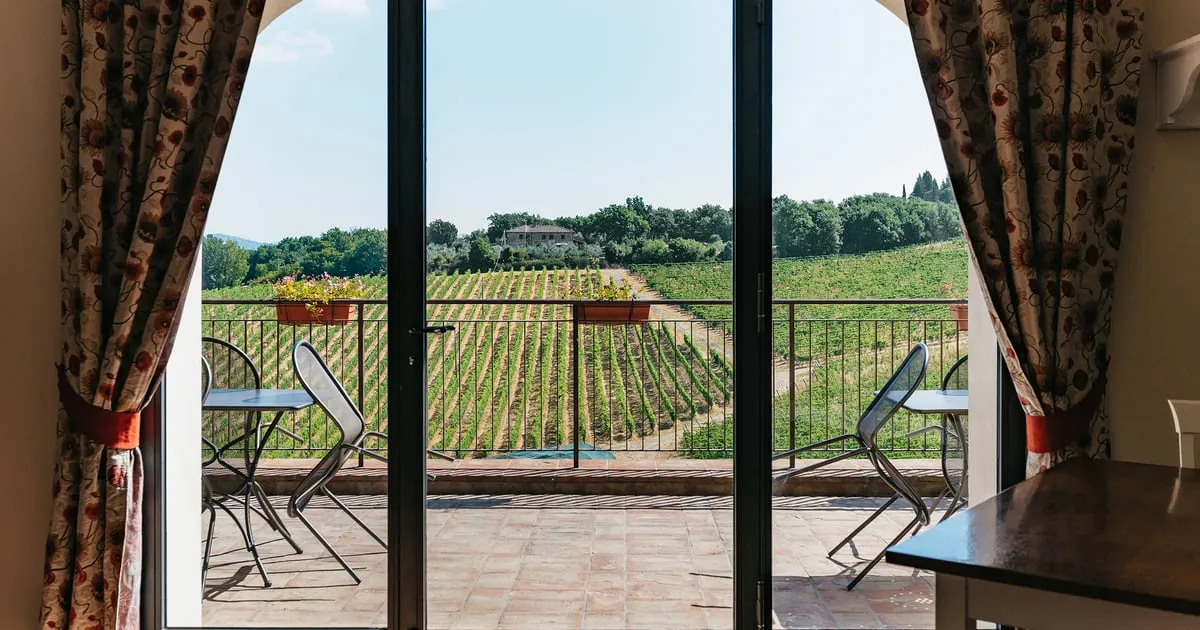
Prestige Rent Small-Group Wine Tasting Tour to Chianti from Florence
Two Chianti Classico wine estates in 4.5 hours, with a cellar tour at each and wines and olive oils poured with cheese, salami and bruschetta. A semi-private option for up to 8 guests is listed.
- Category
- Half-day Chianti wine tour
- Cancellation
- Free cancellation 24h
- Operator
- Prestige Rent
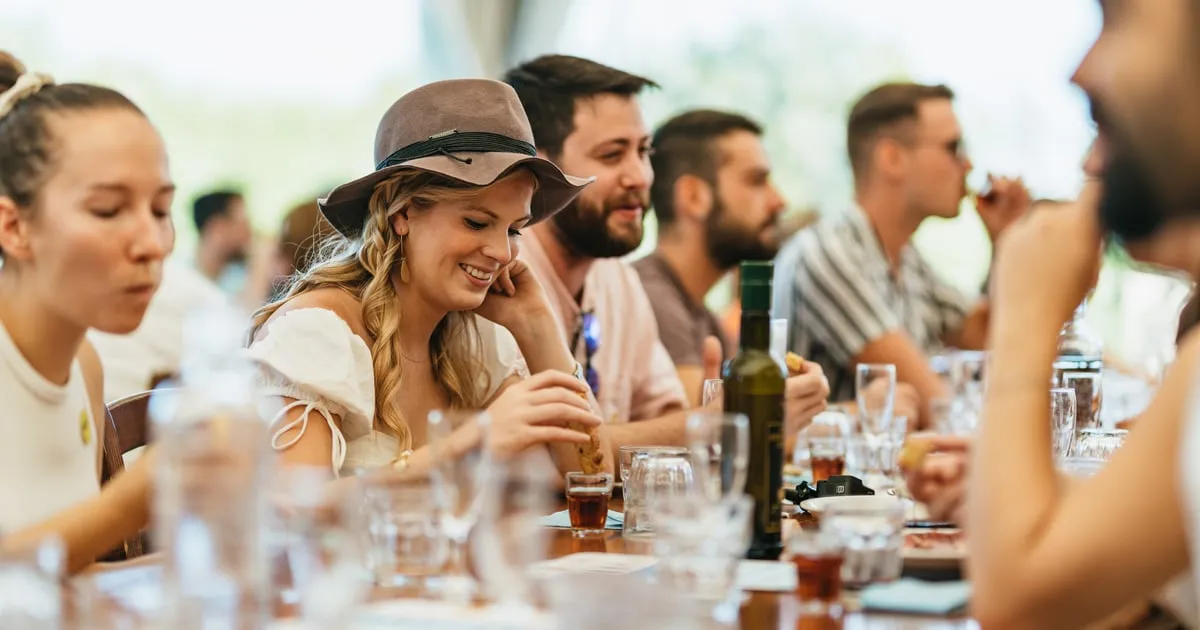
Ciaoflorence Chianti Wineries Tour with Wine Tasting from Florence
A coach to two Chianti wineries, each with a guided tour and a tasting of 3 or 4 wines with bread, olive oil, balsamic vinegar and salami. Lunch and hotel pickup are not included.
- Category
- Half-day Chianti wine tour
- Cancellation
- Free cancellation 24h
- Operator
- Ciaoflorence Tours & Travel
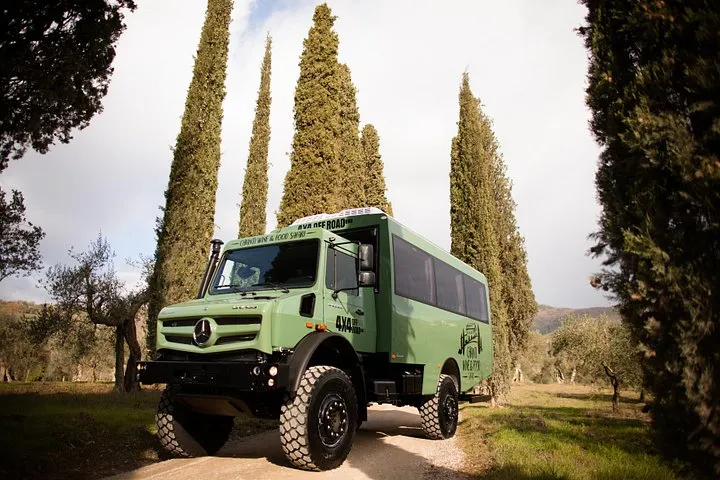
Walkabout Florence Tours Small-Group Chianti Wine Safari with Lunch
A half-day 4x4 wine safari into Chianti Classico: an off-road drive through vineyards, a family winery visit with a guided tasting, then a Tuscan lunch. A nine-hour option adds a second winery.
- Category
- Half-day Chianti wine tour
- Cancellation
- Free cancellation 24h
- Operator
- Walkabout Florence Tours
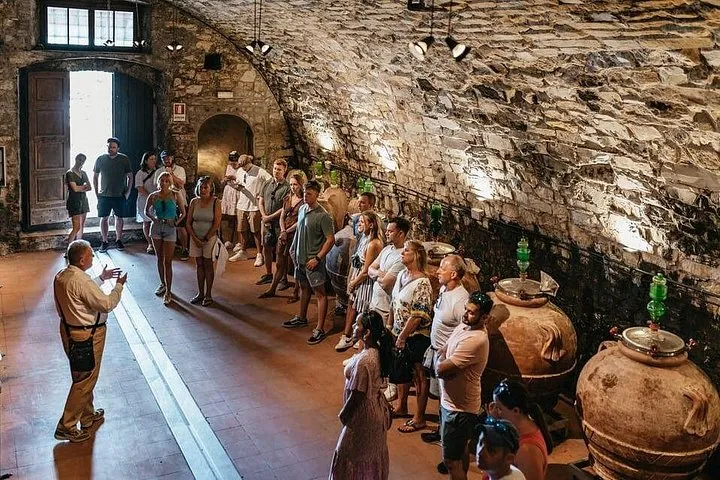
Prestige Rent Small-Group Tuscan Wineries Tour with Olive Oil and Lunch
Three family wine estates and a stop in Greve in Chianti, with a Tuscan light lunch paired with Chianti Classico, Riserva and Super Tuscan wines. A two-winery dinner departure at 2:30pm is also listed.
- Category
- Full-day winery tour
- Cancellation
- Free cancellation 24h
- Operator
- Prestige Rent
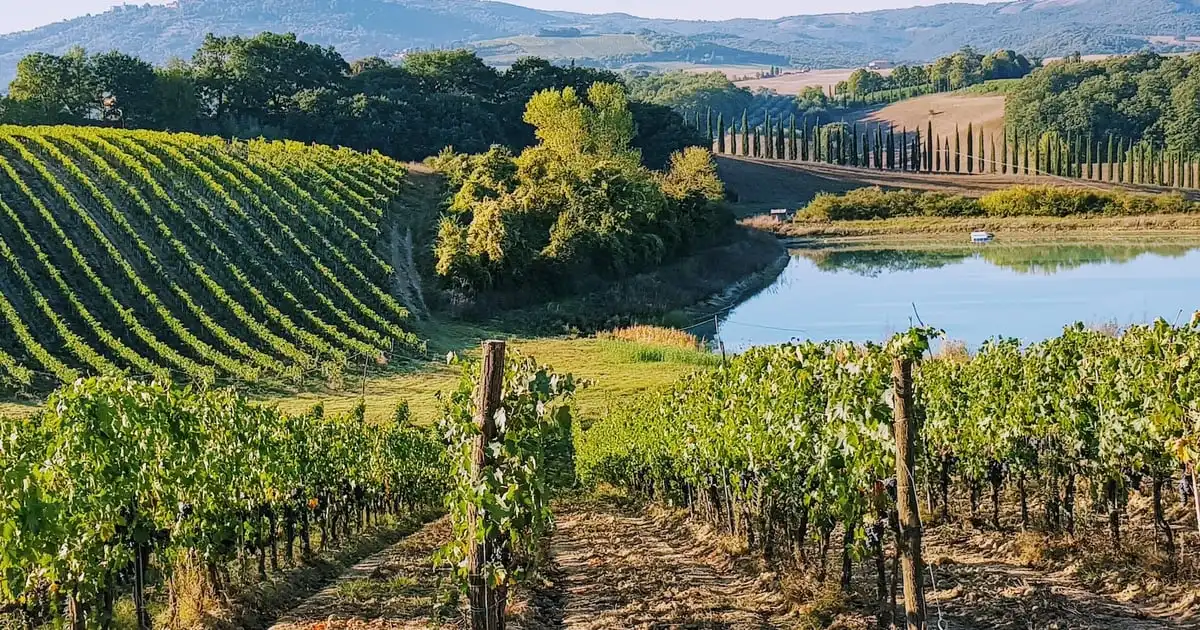
ACCORD Italy Smart Tours Chianti Sunset Wine Tasting Tour from Florence
Two Chianti family estates with a cellar tour and six wine tastings as the sun goes down, in a car or a 7-8 seater minivan. Cheese with jam and bruschetta are served, and a dinner option is listed.
- Category
- Half-day Chianti wine tour
- Cancellation
- Free cancellation 24h
- Operator
- ACCORD Italy Smart Tours
Is Chianti, Italy worth visiting?
Yes, Chianti is worth visiting because almost all postcard and calendar photos of Tuscany were taken in its landscapes, and its hill towns and wineries sit close enough to Florence for a 4.5-hour or full-day trip.
Almost all postcard and calendar photos of Tuscany were taken in Chianti's landscapes. You come for the views, and the wine tastings and hill towns fill the day around them.
Which Tour Fits the Day
The table compares the Chianti tours from Florence on price, length, rating and the number of wineries, with every figure from the tour listings. Pick by route, not by price alone: the Tuscan wineries tour with lunch lists Greve in Chianti, and the San Gimignano wine tour adds San Gimignano.
| Tour | Price | Duration | Rating | Wineries and food |
|---|---|---|---|---|
| Ciaoflorence Chianti Wineries Tour with Wine Tasting from Florence | $55 per person | 5 to 6.5 hours | 4.5 (11,909 reviews) | 2 wineries, snacks, no lunch |
| Prestige Rent Small-Group Wine Tasting Tour to Chianti from Florence | $99 per person | 4.5 hours | 4.9 (4,796 reviews) | 2 wineries, snacks, no meal |
| Italy on a Budget Tours Tuscany Wine Tour with 2 Wineries and San Gimignano | $84.66 per person | 7 hours, 10:00am start and back at about 5:00pm | 4.9 (1,277 reviews) | 2 wineries, snacks, no lunch |
| Walkabout Florence Tours Small-Group Chianti Wine Safari with Lunch | $117.40 per person | 6 to 7 hours for the morning option, 9 hours for the full-day option | 4.9 (5,884 reviews) | 1 or 2 wineries, lunch |
| ACCORD Italy Smart Tours Chianti Sunset Wine Tasting Tour from Florence | $143 per person | 5 to 7 hours | 4.7 (307 reviews) | 2 estates, cheese and bruschetta |
| Prestige Rent Small-Group Tuscan Wineries Tour with Olive Oil and Lunch | $168.20 per person | 8 hours | 5 (1,630 reviews) | 3 wineries, light lunch |
Is Chianti a cheap wine?
No, Chianti is not only a cheap wine: the name covers levels from a Chianti Classico Annata aged 12 months to Gran Selezione aged 30 months from estate-owned grapes, and price follows the level and the producer.
The name covers a wide range, from the wider Chianti DOCG to Chianti Classico Riserva and Gran Selezione.
Why the ageing rules push the price
Chianti Classico Annata needs a minimum of 12 months of ageing, Riserva 24 months, and Gran Selezione 30 months from estate-owned grapes only. The DOCG rules fix the Sangiovese share and the ageing minimums at every level, and only Chianti Classico may display the black rooster seal. On the Tuscan wineries tour with lunch you taste Chianti Classico and Riserva side by side, which shows the difference better than a price tag.
Source: Chianti Classico Consortium.
How do you visit the Chianti region with kids?
The Chianti region works with kids on tours that mix a winery stop with a town, a castle or a lunch, rather than a string of tastings.
Not every tour suits a family. Check each tour's age rule before booking.
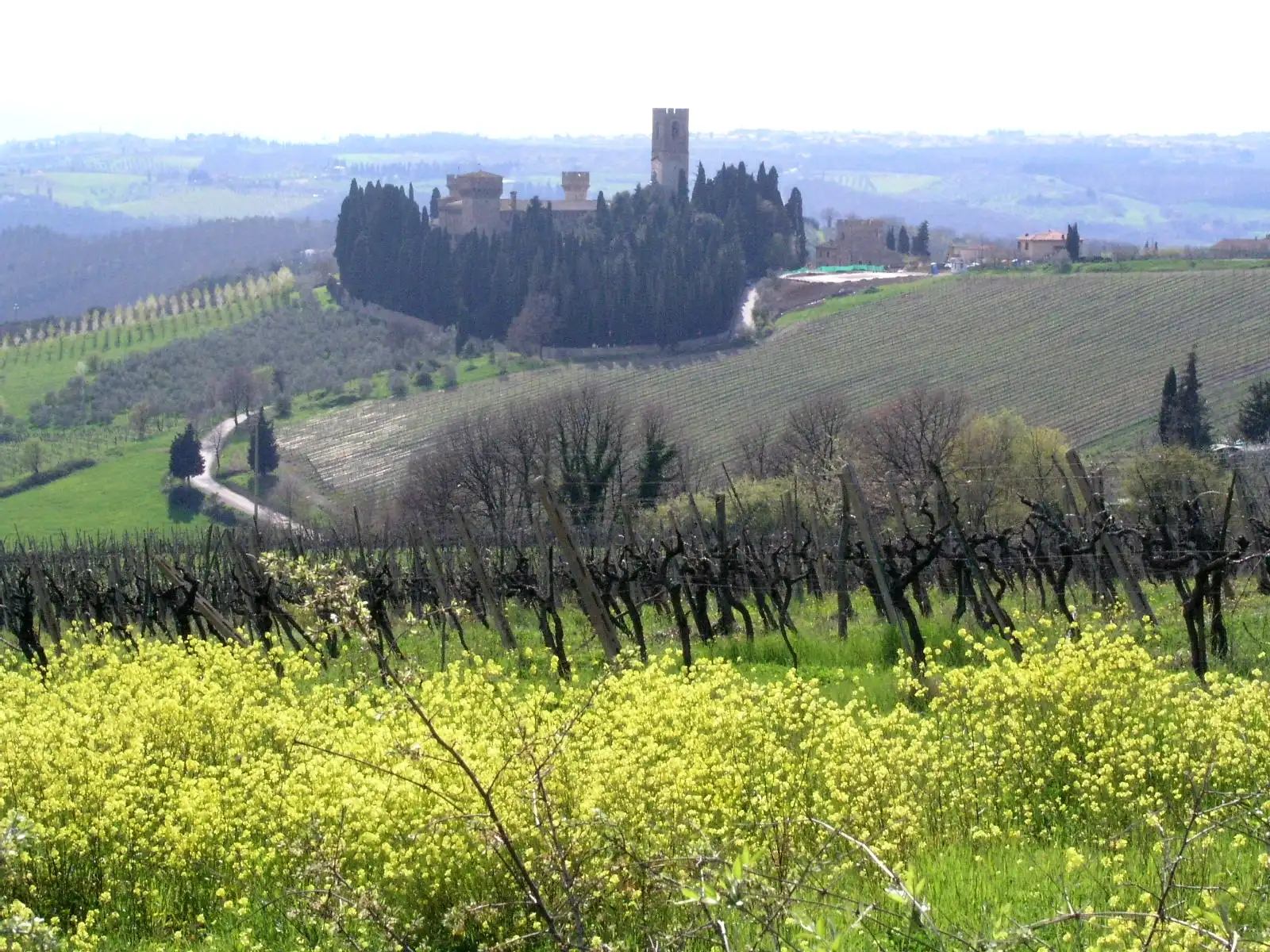
Badia a Passignano rising above its vineyards. Photo: Garassino, CC BY-SA 4.0, via Wikimedia Commons
What to look for
Greve's triangular piazza and the nearby walled village of Montefioralle give kids space to wander. The tour listings set the age rules: the half-day wine tour and the Tuscan wineries tour with lunch take ages 12 and over with no infants, the Chianti bike tour takes ages 10 and up who ride confidently, and the wine safari Florence and San Gimignano wine tour are 18 and over. The harvest runs from the first half of September to the second half of October in Chianti Classico, the busiest time in the vineyards.
Source: Chianti Classico Consortium.
Where should you stay for a Chianti wine trip from Florence?
Stay in Florence for a tour-based wine day, or base yourself in Greve, Radda or Castellina if you want to sleep inside the Chianti Classico zone.
The tours here start from Florence, so the city is the practical base. If you would rather wake up in wine country, the four Classico towns are the natural choices.
Florence as the base
Florence puts you at the meeting point of every tour, such as Piazzale Montelungo for the half-day wine tour and the Chianti wineries tour. No standard option includes hotel pickup, so book a room within walking distance of your tour's meeting point.
Sleeping in the towns
Radda puts the Praetorian Palace and Casa Chianti Classico on your doorstep, and Greve has its triangular piazza and the September wine festival. Castellina, Gaiole, Greve and Radda all lie wholly inside the Chianti Classico zone. One practical warning if you drive yourself: historic city centres often require a pass and you will be fined for passing a ZTL sign without one.
Source: UK Foreign Office.
How do you get to Radda and Castellina in Chianti without a tour?
You reach Radda and Castellina in Chianti by car on the roads south of Florence or by extra-urban bus, though a guided tour remains the simplest way for a wine day.
Independent travellers can do it, with two catches: the buses and the ZTL rules.
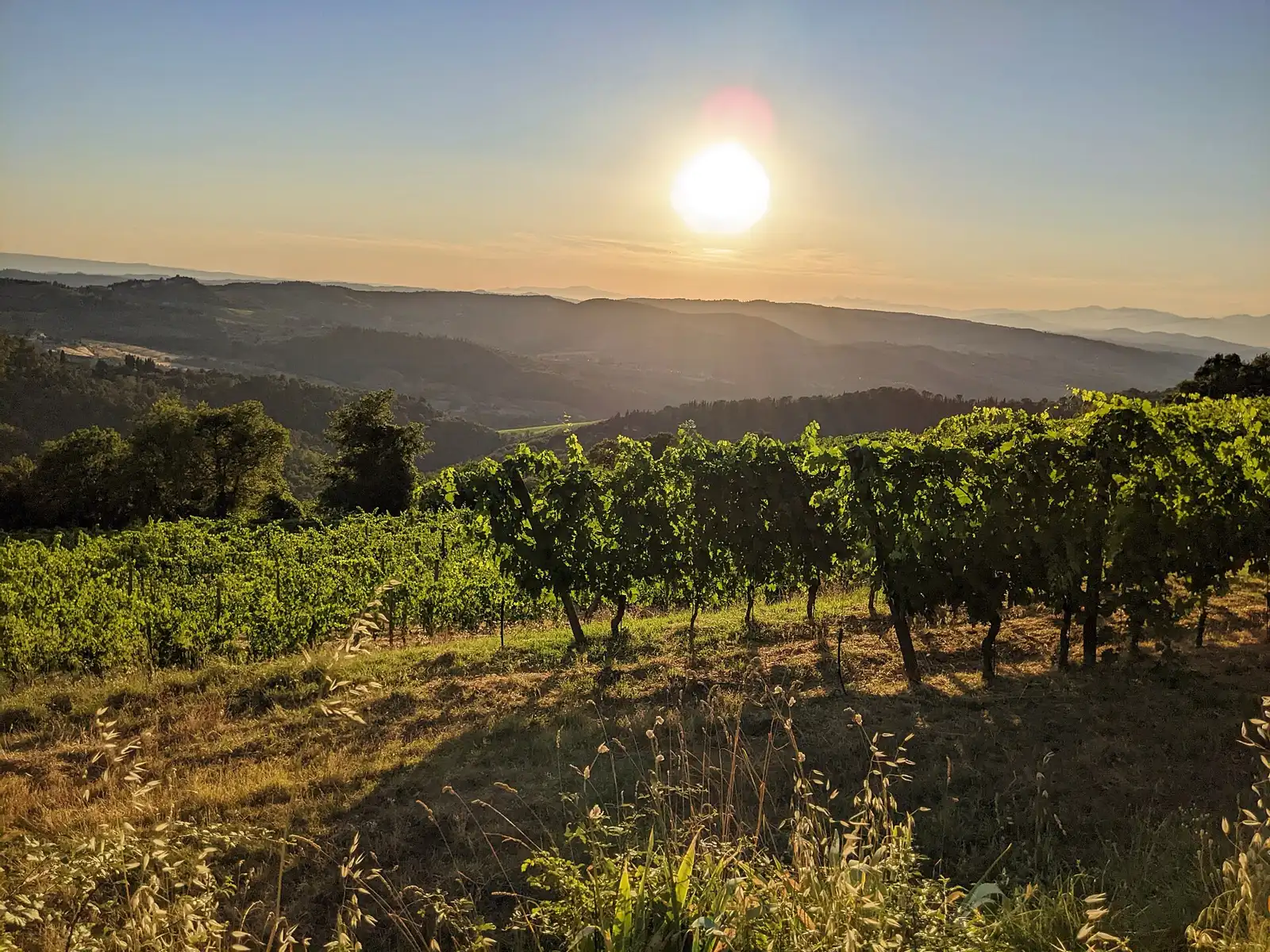
Late sun over a Chianti vineyard. Photo: Julia Borst Brazas, CC BY-SA 4.0, via Wikimedia Commons
By bus
Autolinee Toscane extra-urban buses need two taps, one on boarding and one on leaving, and forgetting the exit tap charges the maximum fare to the end of the line. Check Autolinee Toscane for routes and fares to Radda or Castellina before you travel.
By car
A hire car gives you the freedom to link Greve, Panzano, Radda and Gaiole in one loop, but the driver cannot taste. Remember that hire companies may set a higher minimum age and require an International Driving Permit, and if you bring wine home, US CBP allows one American liter (33.8 fl. oz.) of alcohol in the returning resident personal exemption if you are at least 21 and it is for personal use, while TSA allows carry-on liquids only in containers of 3.4 ounces (100 ml) or less, so packed bottles go in checked baggage.
Sources: Autolinee Toscane, UK Foreign Office, US Customs and Border Protection, TSA.
What food pairs with Chianti wine, and what else can you taste nearby?
Chianti tastings come with Tuscan cheese, ham and olives, and nearby alternatives include Brunello di Montalcino, Vino Nobile di Montepulciano and the white Vernaccia di San Gimignano.
The tastings in Chianti show the pattern: cheese, ham and olives alongside the glasses. Beyond Chianti, Tuscany has three more big names within day-trip reach.
The neighbours
Brunello di Montalcino is made from Sangiovese and must age at least two years in oak and at least 4 months in bottle, with release only from 1 January of the year following the end of the fifth year after the harvest. Rosso di Montalcino has no minimum wood ageing and can be released from 1 September of the year after the harvest. Vino Nobile di Montepulciano must be at least 70% Sangiovese and age at least two years. For white, Vernaccia di San Gimignano holds DOCG status, obtained by its consortium in 1993.
If those names tempt you, the Brunello wine tour covers Montalcino, Pienza and Montepulciano and the Val d'Orcia wine tour runs through a valley on the UNESCO World Heritage list since 2004.
Sources: Brunello di Montalcino Consortium, Vino Nobile Consortium, Vernaccia Consortium, Italian National Tourist Board.
Chianti Wine Region: Frequently Asked Questions
What varietal is Chianti made from?
Chianti must be produced with at least 80% Sangiovese grapes, often joined by Canaiolo and Malvasia del Chianti in the classic blend. Since 2006 Chianti Classico can be made exclusively with red grape varieties, and it has been legal since 1995 to make a Chianti with 100% Sangiovese. Taste it on the Chianti wineries tour.
Is there a Chianti white wine?
No, Chianti is a red wine. For a Tuscan white, look to Vernaccia di San Gimignano, which has held DOCG status since 1993 and is poured on the San Gimignano wine tour.
Why is the black rooster the symbol of Chianti?
The black rooster (gallo nero) is the seal of the Chianti Classico consortium, founded in Radda in 1924 by 33 wine growers as the first wine producers' consortium established in Italy. Only Chianti Classico may display the black rooster seal, so it is the fastest way to spot a Classico bottle on a shelf or tasting list. See Chianti vs Chianti Classico.
What is the best time of year to visit the Chianti wine region?
The harvest in Chianti Classico runs from the first half of September to the second half of October, depending on location and altitude. Greve also hosts the most important winemaking festival in Chianti in September, and the Chianti sunset wine tour lists a photo stop there.
Which Chianti tour from Florence should I pick?
Pick by route and duration. For the lowest price, the Chianti wineries tour at $55 per person visits 2 wineries in 5 to 6.5 hours. For lunch, choose the wine safari Florence at $117.40 per person for 6 to 9 hours, or the Tuscan wineries tour with lunch at $168.20 per person for 8 hours with olive oil tasting. All three offer free cancellation 24 hours ahead.
More Guides
- Greve in Chianti: Wine Tastings and Getting There from Florence
Greve in Chianti sits 30 km from Florence with tastings at Verrazzano, Montefioralle and more. Plan your wine day for 2027 here.
- Brunello Di Montalcino Wineries: Visiting Montalcino on a Wine Tour from Florence
Visit Brunello di Montalcino wineries from Florence in 2027: cellar tastings, Montalcino town and the Val d'Orcia. Compare the day tours.
- What Is Chianti Classico Riserva? A Guide for Wine Tours from Florence
Learn the Riserva ageing rules, taste profile and pairings, then pick the Chianti Classico wine tour from Florence that pours it. Plan your 2027 trip.