 Winery Tours Florence
Home › Guides › Greve in Chianti: Wine Tastings and Getting There from Florence
Greve in Chianti: Wine Tastings and Getting There from Florence
Greve in Chianti is worth the trip for its arcaded Piazza Matteotti, the hilltop hamlet of Montefioralle and castle wineries such as Castello di Verrazzano, about 18 miles (30 km) from Florence. The castles around Greve take reservations only, so a tour that books the cellars is the easy way in: the $143 Chianti sunset wine tour lists Greve and Montefioralle as photo stops. This guide covers what Greve is famous for, the square, where to taste, getting there, the markets and fairs, and a one-day plan.
Quick answer Greve in Chianti at a glance
Greve in Chianti sits about 18 miles (30 km) south of Florence and is one of the gateways to the Chianti Classico wine area. The top things to do are Piazza Matteotti, the hamlet of Montefioralle, and wine tastings at castles like Castello di Verrazzano, which open by reservation only. The Tuscan wineries tour with lunch at $168.20 per person lists Greve in Chianti on its 8-hour route with 3 wineries on the lunch option.
Key takeaways
- Compare every winery tours florence departure for a Chianti day
- End at dusk on the Chianti sunset wine tour, with Greve and Montefioralle photo stops
- Add a Panzano lunch on the non-refundable Dario Cecchini tour
- See where to taste around Greve before you book
Is Greve in Chianti worth visiting?
Yes, especially if your trip is built around wine, because Greve is the chief town of the Chianti Classico zone and its surrounding castles are working wineries you can taste in.
For a wine traveller the answer is easy. Greve gives you a walkable old town plus a cluster of bookable wineries around it, which is exactly the shape of a good tasting day.
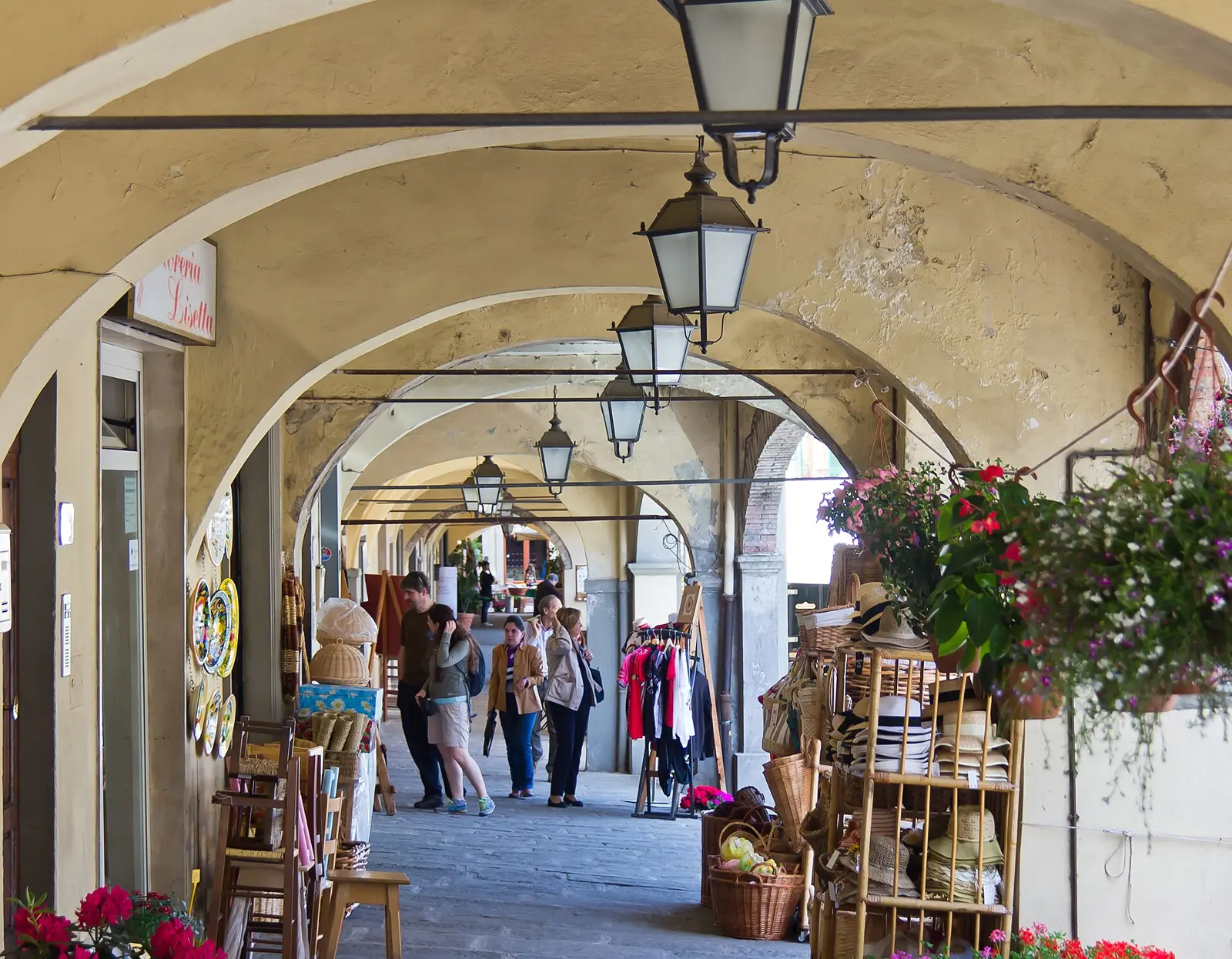
The arcades around Piazza Matteotti, the market square of Greve in Chianti. Photo: Raimond Spekking, CC BY-SA 4.0, via Wikimedia Commons
Why it works as a wine day
Greve grew in the 13th century as the marketplace for the castle of Montefioralle, sitting at the crossroads of the Chiantigiana road, the road to Valdarno and the road to the Val di Pesa. With the enlargement of the Chianti wine district in 1932 it ended up in a noble area producing Chianti and Super Tuscan wines.
The practical point for your day is that the castles and villas around Greve are wineries that open for tours and experiences by reservation only. That makes a guided tour or a pre-booked tasting the smart move. Popular attractions around town include Castello di Verrazzano, Montefioralle Winery, Vignamaggio and Azienda Agricola.
The whole territory of Greve in Chianti lies inside the Chianti Classico production zone, a 71,800 hectare area shared between the provinces of Florence and Siena. If you want to taste Chianti Classico where it is made, this is one of the four towns that gives the zone its backbone.
Source: Chianti Classico Consortium.
What is Greve in Chianti famous for?
Greve is famous as the chief town of the Chianti Classico wine zone, for its triangular arcaded Piazza Matteotti, for Chianti's largest wine fair, and for the hamlet of Montefioralle above it.
Three things put Greve on the map: wine, the square, and the wine fair.
Wine, the square and the fair
Greve is named after the river that runs through it, and it was renamed Greve in Chianti in 1972 after the area was included in the Chianti wine district. The town sits in the Val di Greve, about 31 kilometres (19 miles) south of Florence and 42 kilometres (26 miles) north of Siena.
Piazza Matteotti is the arcaded main square and the town's market square. Antica Macelleria Falorni, a Tuscan butcher shop, has traded in the same spot since 1729. The town is also home to Chianti's largest wine fair, the Chianti Classico Expo, which takes over the square each September.
For your wine day the fame that matters is in the cellars. Chianti Classico must be at least 80% Sangiovese, and the area's wines range from Annata with 12 months of ageing up to Gran Selezione with 30 months. The Tuscan wineries tour with lunch pours Chianti Classico, Riserva and Super Tuscans at each of its estates.
Source: Chianti Classico Consortium.
What is there to see in the historic center and Piazza Matteotti?
The historic center packs Piazza Matteotti, the Chiesa Santa Croce with paintings of the school of Fra Angelico, the Museum of Sacred Art, the neo-Renaissance Palazzo del Comune and the 1729 butcher shop Antica Macelleria Falorni into a short walk.
You can see the whole center on foot between tastings.
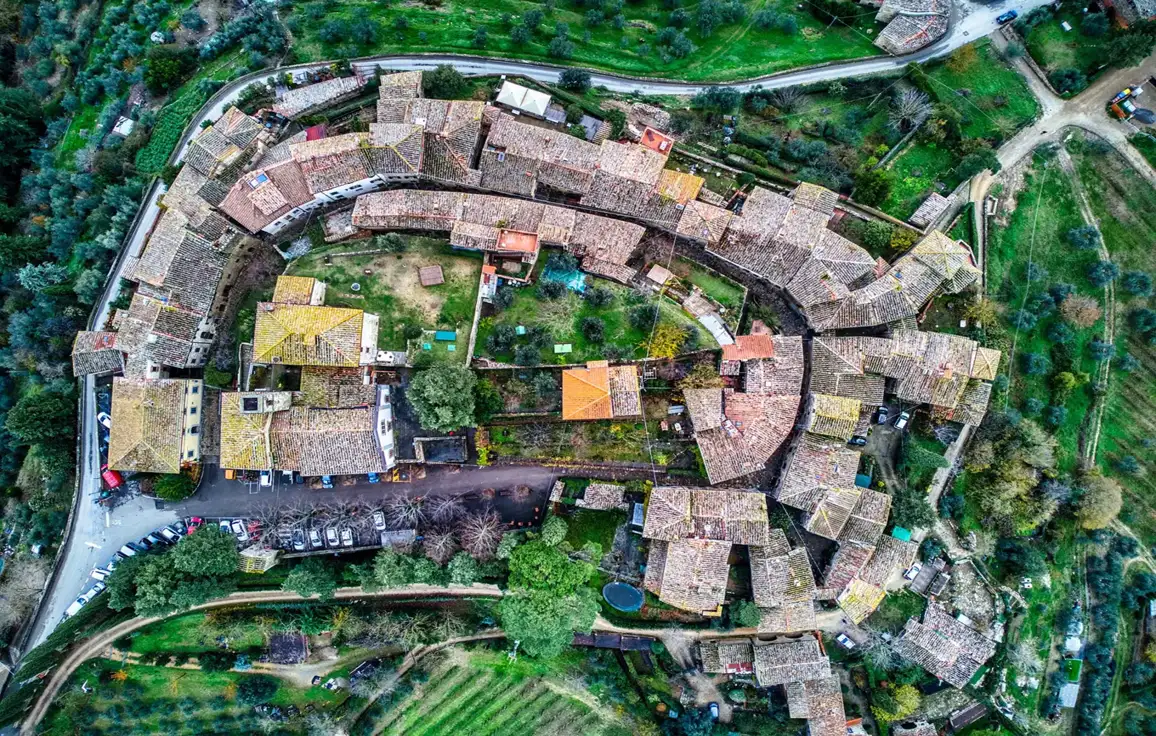
Montefioralle from above, a walled hamlet a short walk uphill from Greve in Chianti. Photo: Hagai Agmon-Snir, CC BY-SA 4.0, via Wikimedia Commons
The square
Piazza Matteotti is where the town gathers and doubles as the market square, with the Saturday market every week. Antica Macelleria Falorni, a Tuscan butcher shop in the same spot since 1729, is the stop for cured meats to set against a tasting.
The Palazzo del Comune, the town hall, was built in neo-Renaissance style between 1894 and 1895.
Churches and museums
The Chiesa Santa Croce dates from the 11th century and was rebuilt in 1325 after being burned by Castruccio Castracani. Inside are paintings of the school of Fra Angelico.
The Museum of Sacred Art sits in the former hospital of St Francis on Via S. Francesco n. 1. The Wine Museum, with 180 different corkscrews on display, was closed for renovation, so treat a winery tasting as your museum stop instead.
Where can you taste wine around Greve in Chianti?
The castles and villas around Greve, including Castello di Verrazzano, Vignamaggio, Vicchiomaggio and Montefioralle Winery, are working wineries that open for tastings by reservation only.
Every major tasting stop around Greve needs a booking, which is why a guided tour with reservations included is the simplest way to taste here.
The wine castles
Castello di Verrazzano sits on a 348 metre hill about 2 kilometres from the center of Greve. It belonged to the family of the explorer Giovanni da Verrazzano, was turned into a villa in the 17th century, and today is a winery open for tastings.
Villa Vignamaggio was built by the Gherardini family in the 14th century, and tradition holds it was the home of Lisa Gherardini, the Mona Lisa. Vicchiomaggio Castle is first cited in documentation from 857 and keeps a 13th-century tower. Montefioralle Winery in the hamlet of the same name rounds out the cluster.
Visit Tuscany is clear that these castles and villas open for tours and experiences by reservation only, so turning up unbooked is a risk. A winery tours florence package books the cellars and the transport together.
| Stop | What it is | Booking |
|---|---|---|
| Castello di Verrazzano | Castle winery on a 348 m hill, 2 km from Greve center | Reservation only |
| Vignamaggio | 14th-century villa of the Gherardini family | Reservation only |
| Vicchiomaggio Castle | First cited in 857, 13th-century tower | Reservation only |
| Montefioralle Winery | Winery in the hamlet of Montefioralle | Reservation only |
Tours That Fit
Guided days from Florence whose routes list Greve in Chianti or nearby Panzano.
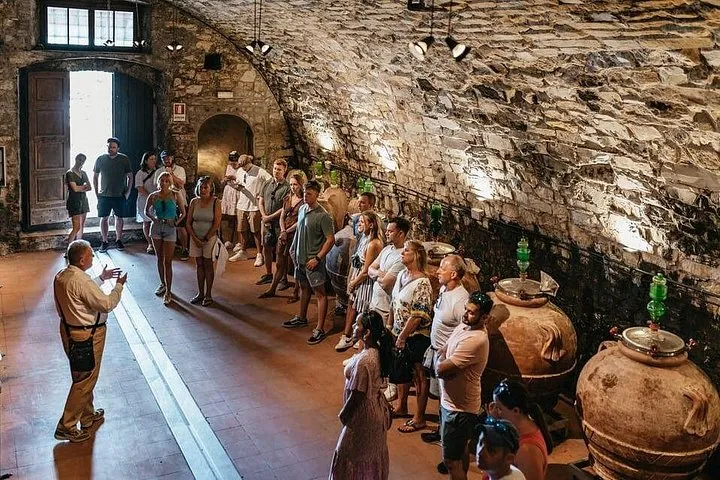
Prestige Rent Small-Group Tuscan Wineries Tour with Olive Oil and Lunch
Three family wine estates and a stop in Greve in Chianti, with a Tuscan light lunch paired with Chianti Classico, Riserva and Super Tuscan wines. A two-winery dinner departure at 2:30pm is also listed.
- Category
- Full-day winery tour
- Cancellation
- Free cancellation 24h
- Operator
- Prestige Rent
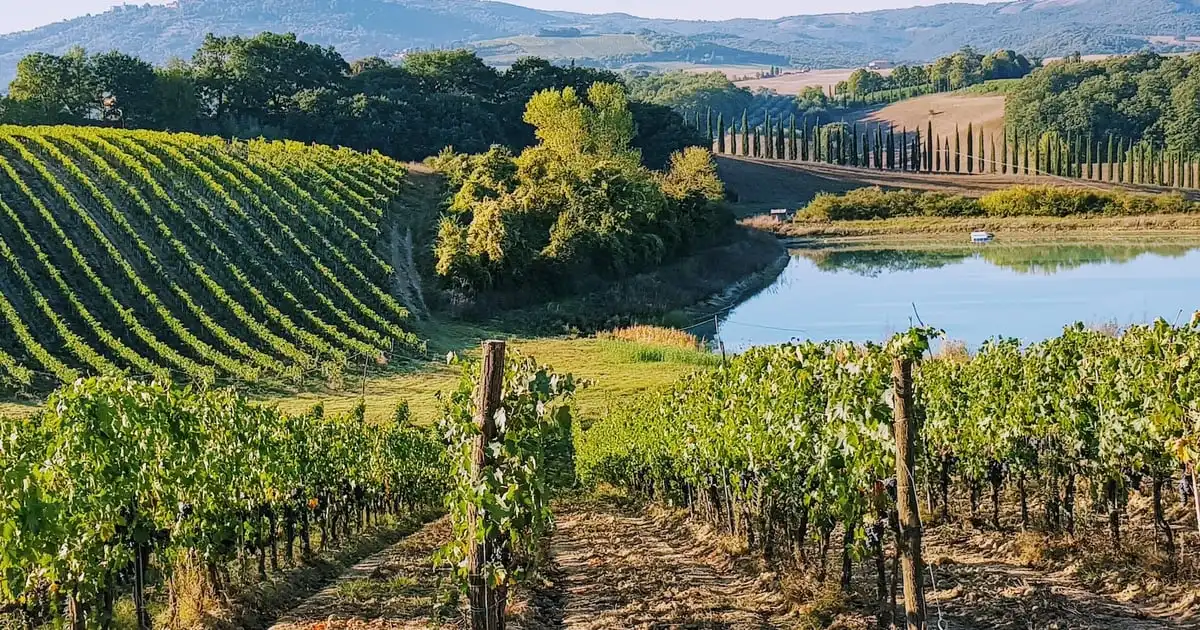
ACCORD Italy Smart Tours Chianti Sunset Wine Tasting Tour from Florence
Two Chianti family estates with a cellar tour and six wine tastings as the sun goes down, in a car or a 7-8 seater minivan. Cheese with jam and bruschetta are served, and a dinner option is listed.
- Category
- Half-day Chianti wine tour
- Cancellation
- Free cancellation 24h
- Operator
- ACCORD Italy Smart Tours

Grape Tours Chianti Wine Tour with 2 Organic Wineries and Lunch at Dario Cecchini
Two organic Chianti wineries with about 10 wines poured, then a lunch of traditional dishes and steak at the butcher Dario Cecchini. Groups are capped at 8, and the booking is non-refundable.
- Category
- Full-day winery tour
- Cancellation
- Non-refundable
- Operator
- Grape Tours
How do you get to Greve in Chianti from Florence?
Greve sits along the SR222, locally known as the Chiantigiana road, about 30 km south of Florence, and you can drive it, take an extra-urban bus, or let a guided tour handle the roads.
The road is the famous one, the Chiantigiana, and it is also the reason most wine travellers take a tour instead of a car.
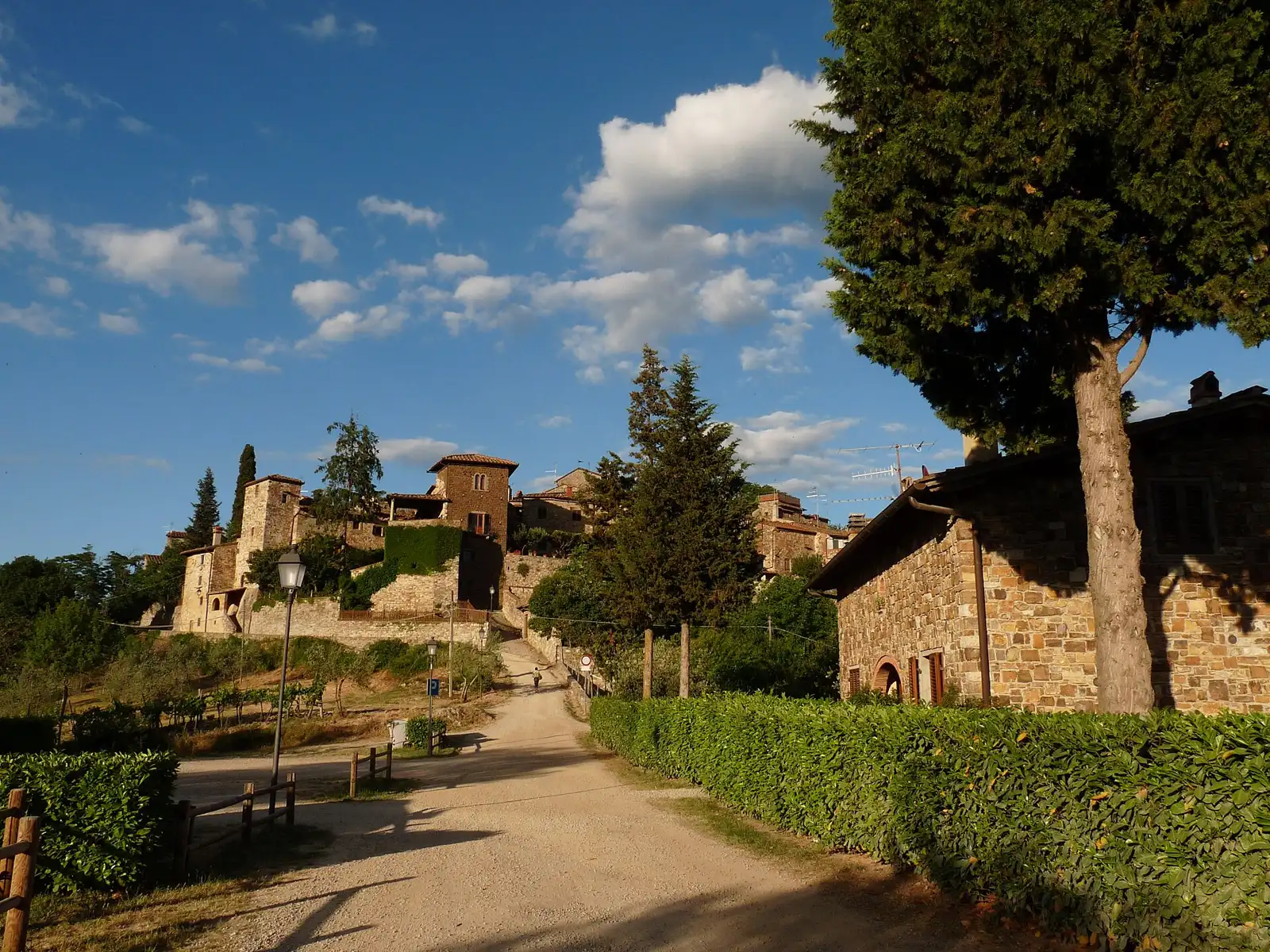
The approach to Montefioralle, the hamlet above Greve in Chianti. Photo: lo.tangelini, CC BY-SA 2.0, via Wikimedia Commons
By car
Greve is about 18 miles (30 kilometers) from Florence along the SR222 Chiantigiana, the hill road that continues about 40 km to Siena in the other direction.
One warning if you rent a car: GOV.UK notes that historic city centres in Italy often require a pass and you will be fined if you drive past a ZTL sign without one, and that car hire companies may set a higher minimum age and require an International Driving Permit. The driver cannot taste, so a car suits a day of sightseeing more than a day of wine.
By bus
Autolinee Toscane runs the extra-urban buses through Chianti. Two things to know: you tap your card once on boarding and once on leaving, and forgetting the exit tap charges the maximum fare to the end of the line. Check the Autolinee Toscane app for times and fares from Florence to Greve on the day you travel.
By tour
For a wine day a tour removes every friction point: the narrow roads, the driver for the person tasting, and the reservations the castles require. The ACCORD Chianti sunset wine tour runs 5 to 7 hours at $143 per person with 2 family estates and optional photo stops in Greve and Montefioralle. The Prestige Rent Tuscan wineries tour with lunch runs 8 hours at $168.20 per person and lists Greve in Chianti on its route.
Both carry free cancellation 24 hours ahead, and neither includes hotel pickup on its standard option.
| Option | Time from Florence | Best for |
|---|---|---|
| Guided tour | 5 to 8 hours on the tours that list Greve | Tastings plus a driver |
| Rental car | Along the SR222 Chiantigiana | Stopping at hamlets on your own |
| Bus | Extra-urban Autolinee Toscane route | Budget travel, no driver needed |
Sources: UK Foreign Office, Autolinee Toscane.
What is the prettiest town in Chianti?
Montefioralle, the walled stone hamlet on the hill above Greve, is the closest candidate, with Panzano in Chianti the other strong pick nearby.
The hamlets around Greve are the reason to add half a day beyond the square.
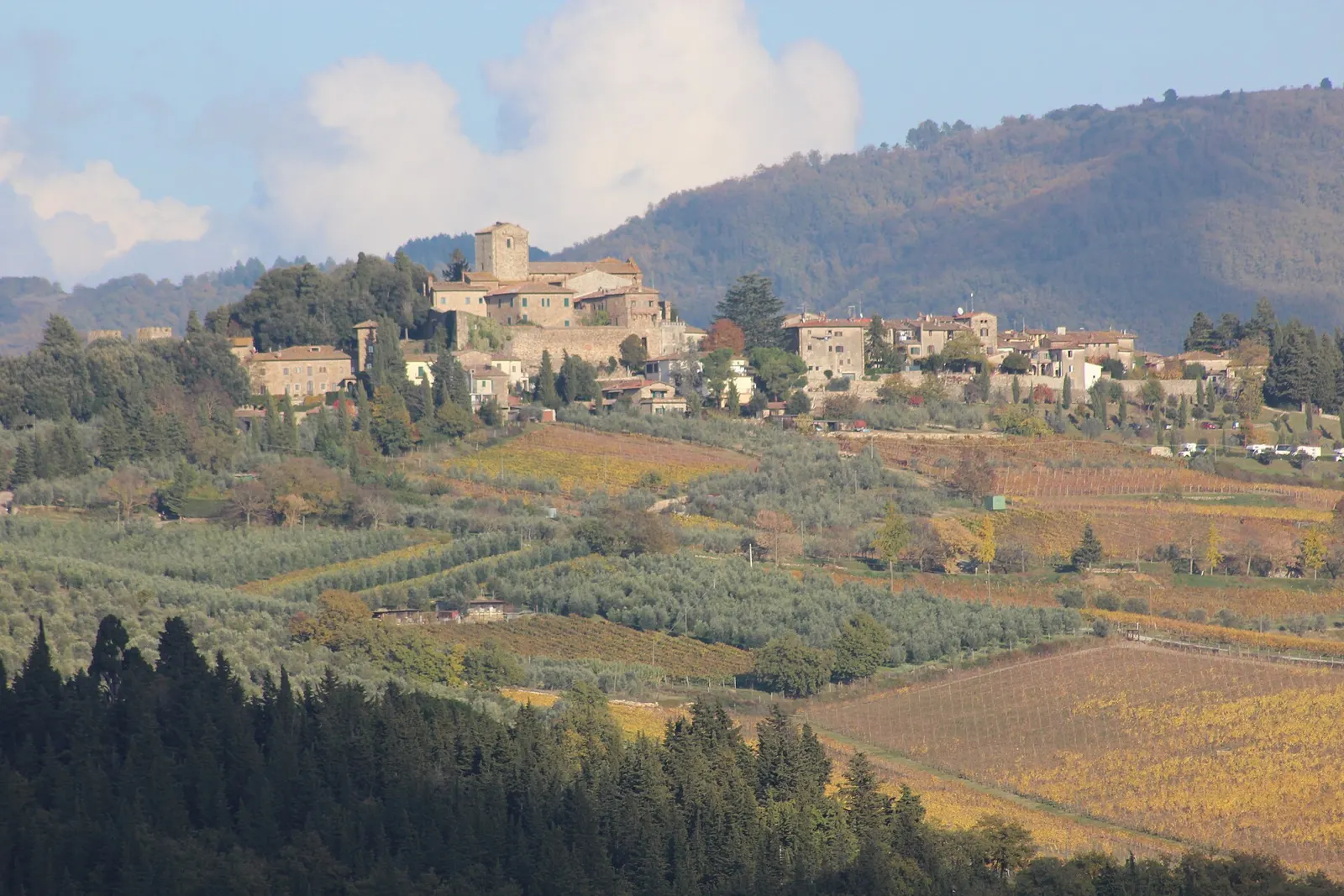
Panzano in Chianti seen across the vineyards. Photo: LigaDue, CC BY-SA 4.0, via Wikimedia Commons
Montefioralle
Montefioralle is a tiny walled hamlet directly above Greve, which was its marketplace in the 13th century. Inside the walls are the church of Santo Stefano and a house which tradition says belonged to Amerigo Vespucci. Montefioralle Winery pours here, so the hamlet and a tasting fit in one stop.
Panzano in Chianti
Panzano in Chianti sits about 500 meters above sea level and is known for Dario Cecchini's butcher shop. It hosts the Vino al Vino wine fair on the 3rd weekend of September. The Dario Cecchini tour at $366.88 per person pairs 2 organic wineries with lunch at Dario Cecchini in 7 hours, for up to 8 guests aged 18 and over.
It is non-refundable, so book it only once your dates are fixed.
Map of Greve in Chianti and the Wineries Around It
Greve, the hamlet above it and the estates named in this guide.
- 1 Piazza Matteotti, GreveThe arcaded square with the Falorni butcher shop.
- 2 MontefioralleWalled hamlet directly above Greve.
- 3 Castello di VerrazzanoCastle winery, about 30 km from Florence. Reservations only.
- 4 VignamaggioEstate south of Greve, on the road to Lamole.
- 5 Panzano in ChiantiDario Cecchini's butcher shop.
Numbers match the pins on the map.
Map data: OpenStreetMap.
When are the markets and wine festivals in Greve in Chianti?
Piazza Matteotti hosts a weekly market every Saturday, the Il Pagliaio organic market on every 4th Sunday of the month from spring to fall, and the Chianti Classico Expo wine fair in September.
Time your day around a market or a fair and Greve gets twice as lively.
Markets
The Saturday market on Piazza Matteotti still takes place every Saturday, with stalls of fruit, vegetables, cheese, olives and textiles. From spring to fall, on every 4th Sunday of the month, the square also hosts the Il Pagliaio organic market.
Buy pecorino, bread and olives in the morning and you have a picnic to set against your afternoon tasting.
Wine fairs
In September Piazza Matteotti becomes the center of the Chianti Classico Expo, Chianti's largest wine fair, where producers pour across the town. Panzano adds the Vino al Vino fair on the 3rd weekend of September. The Chianti Classico harvest itself runs from the first half of September to the second half of October depending on location and altitude, so a September visit may catch working cellars as well as fairs.
| Event | Where | When |
|---|---|---|
| Saturday market | Piazza Matteotti | Every Saturday |
| Il Pagliaio organic market | Piazza Matteotti | 4th Sunday of the month, spring to fall |
| Chianti Classico Expo | Piazza Matteotti | September |
| Vino al Vino | Panzano in Chianti | 3rd weekend of September |
Source: Chianti Classico Consortium.
How do you plan one perfect wine day in Greve in Chianti?
Book a guided tour from Florence, start at Piazza Matteotti and Antica Macelleria Falorni, taste at a castle like Verrazzano by reservation, then finish in Montefioralle or at sunset.
Greve rewards a simple shape: square, cellar, hamlet, glass at dusk.
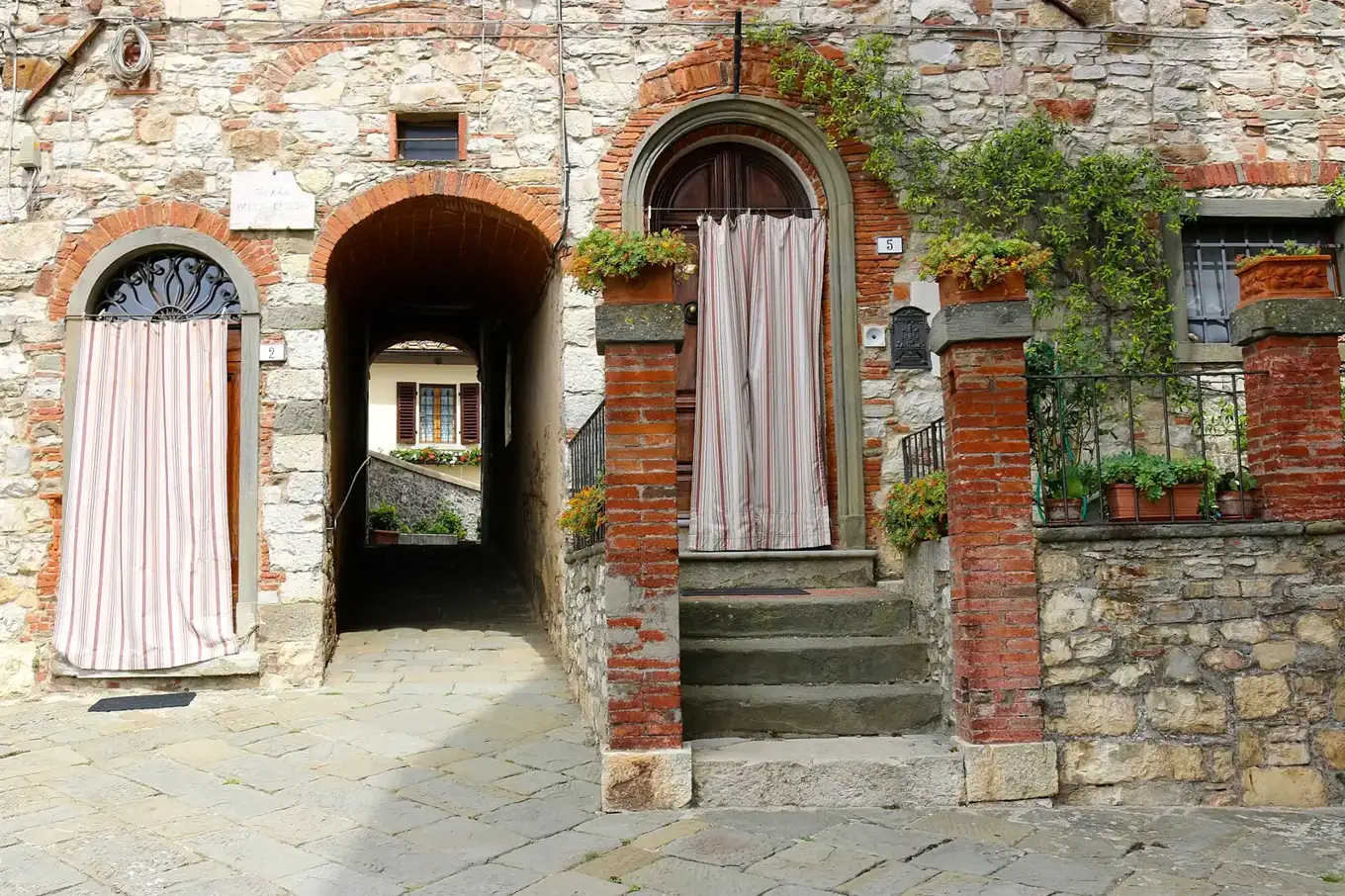
A corner of the old centre of Radda in Chianti. Photo: Ryan Snyder, CC BY 2.0, via Wikimedia Commons
A morning-to-dusk shape
Start at Piazza Matteotti while the arcades are quiet, with Antica Macelleria Falorni for local cured meats. Booked tastings at the castles fill the middle of the day, since reservations are the only way in.
The table compares the tours from Florence whose routes list Greve in Chianti or nearby Panzano, with prices, durations and ratings from their listings. The ACCORD Chianti sunset wine tour ends the day above the vines with 6 wine tastings at 2 family estates. The Prestige Rent Tuscan wineries tour with lunch adds a light lunch. The Dario Cecchini tour is the only non-refundable one.
| Tour | Price | Duration | Rating |
|---|---|---|---|
| ACCORD Chianti Sunset Wine Tasting Tour | $143 per person | 5 to 7 hours | 4.7 (307 reviews) |
| Prestige Rent Tuscan Wineries Tour with Lunch | $168.20 per person | 8 hours | 5 (1,630 reviews) |
| Grape Tours Dario Cecchini Tour, non-refundable | $366.88 per person | 7 hours | 5 (330 reviews) |
Greve vs San Gimignano: which should you pick?
Pick Greve if your day is about Chianti Classico tastings in a wine town, and San Gimignano if you want a UNESCO-listed tower town with Vernaccia.
Both work as wine bases, and one tour removes the choice.
How they compare
San Gimignano has been on the UNESCO World Heritage list since 1990. Greve is about 18 miles from Florence and sits at the heart of the Chianti Classico zone, so the tastings are the point rather than a bonus.
For San Gimignano, the Italy on a Budget Tuscany Wine Tour with 2 Wineries and San Gimignano covers two wineries plus the towers in 7 hours at $84.66 per person, leaving at 10:00am and back at about 5:00pm.
Source: Italian National Tourist Board.
Greve in Chianti FAQ
What does "greve" in Chianti mean?
Greve is named after the river that runs through the town. The name Greve in Chianti was adopted in 1972 after the area was included in the Chianti wine district.
Is Greve in Chianti worth visiting for wine?
Yes. Greve is the chief town of the Chianti Classico zone and the castles around it, like Castello di Verrazzano and Vignamaggio, are wineries open for tastings by reservation. A guided Chianti wineries tour from $55 per person makes it easy.
Is Greve in Chianti good with kids?
The square, the Saturday market and the 1729 butcher shop Antica Macelleria Falorni all work for families. Tastings are for adults: the Tuscan wineries tour with lunch takes ages 12 and over with no infants, and the Dario Cecchini tour is 18 and over.
Where should you stay in Greve in Chianti?
Staying overnight in or near Greve lets you book a castle tasting on a morning reservation without the drive from Florence. If you base yourself in Florence instead, the Chianti sunset wine tour brings you back the same evening.
Where should you eat in Greve in Chianti?
Antica Macelleria Falorni, in the same spot since 1729, is the town's butcher for cured meats. Nearby Panzano in Chianti is known for Dario Cecchini's butcher shop, where the non-refundable Dario Cecchini tour has lunch with steak.
How much wine can I bring home from Greve?
US CBP allows one American liter (33.8 fl. oz.) of alcohol in the returning resident personal exemption if you are at least 21 and it is for personal use. Amounts above that are dutiable, and TSA allows carry-on liquids only in containers of 3.4 ounces (100 ml) or less, so pack bottles in checked baggage.
More Guides
- What Is Chianti Classico Riserva? A Guide for Wine Tours from Florence
Learn the Riserva ageing rules, taste profile and pairings, then pick the Chianti Classico wine tour from Florence that pours it. Plan your 2027 trip.
- Chianti vs Chianti Classico: What Is the Difference on a Florence Wine Tour?
Chianti vs Chianti Classico in 2027: two DOCGs, 80% vs 70% Sangiovese, 3 ageing levels. Learn the label, then book a Chianti tasting.
- Chianti Wine Region: Which Towns and Wineries a Tour from Florence Reaches
See the Chianti wine region in 2027: Greve, Radda, Gaiole and winery tastings on day tours from Florence. Compare the trips and book.