 Winery Tours Florence
Home › Guides › What Is Super Tuscan Wine, and Where Can You Taste It from Florence?
What Is Super Tuscan Wine, and Where Can You Taste It from Florence?
Super Tuscan wine is an unofficial name for high-quality Tuscan red made outside the region's traditional rules, usually mostly Sangiovese with Cabernet, Merlot or Syrah added. You can taste the style on winery tours from Florence: the Tuscan wineries tour with lunch pours Chianti Classico, Riserva and Super Tuscans at each estate. This guide covers what the wine is, why estates broke the rules, the names to know, how it tastes, and where to try it from Florence.
Quick answer Super Tuscan wine in short
A Super Tuscan is a Tuscan red that breaks the old regional rules, usually mostly Sangiovese with Cabernet, Merlot or Syrah added. The term is not legally defined in Italy, so it does not appear on labels. The first one, Sassicaia, was released commercially in 1971, and the style is poured near Florence on the $84.66 San Gimignano wine tour, with up to 8 wines including Super Tuscans.
Key takeaways
- Compare every option on the winery tours florence homepage
- Taste Chianti Classico, Riserva and Super Tuscans on the Tuscan wineries tour with lunch
- Pair the style with Vernaccia on the San Gimignano wine tour
- Taste Brunello, the regulated contrast, on the Val d'Orcia wine tour from Florence
What kind of wine is a Super Tuscan?
It is a high-quality Tuscan red made outside the region's traditional winemaking rules, and that is the whole definition.
Start by killing the most common myth. Super Tuscan is not a region, a grape or a legal category. It is a nickname that stuck.
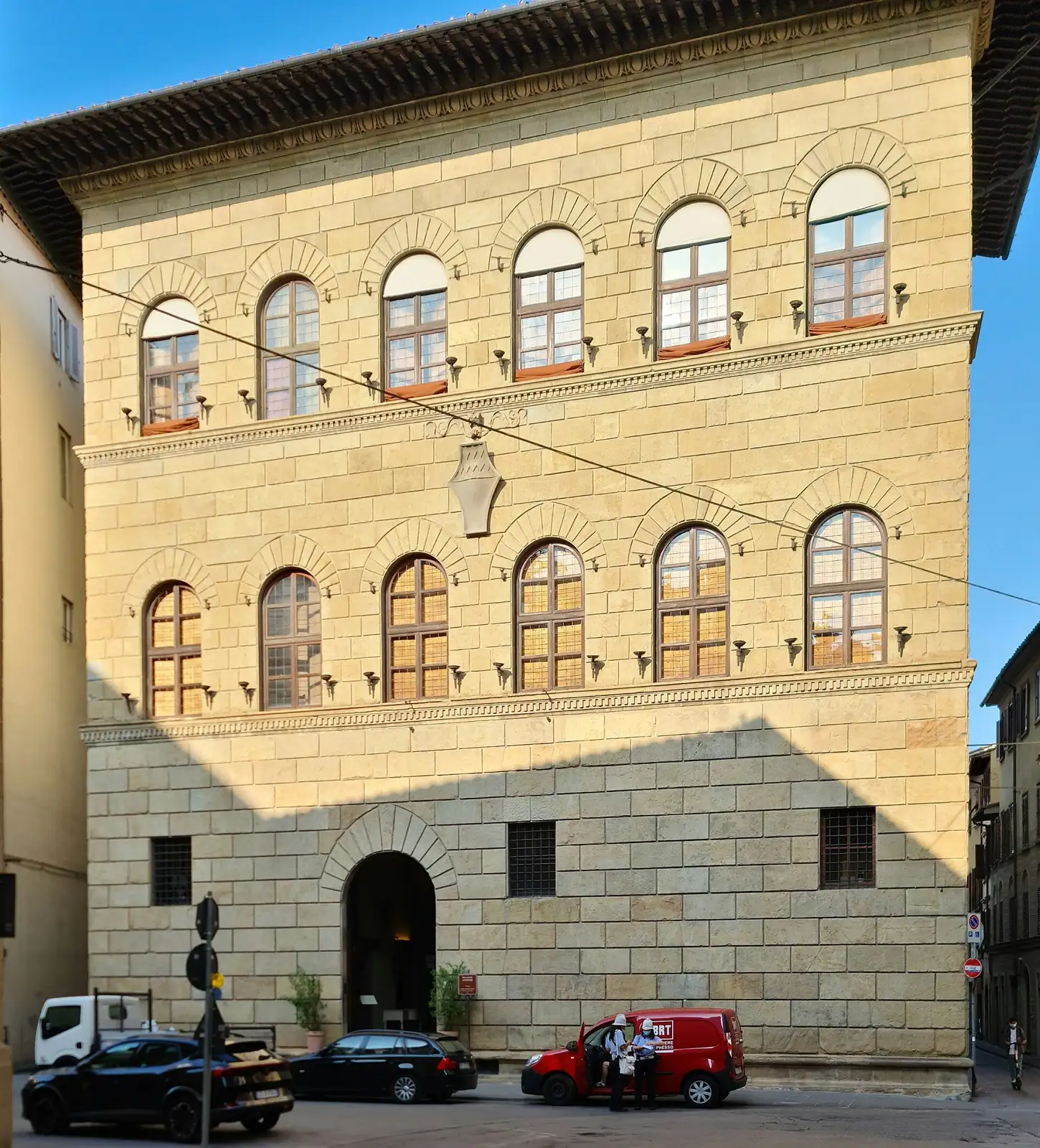
Palazzo Antinori in Florence, the city home of the Antinori wine family since the 15th century. Photo: Ricardalovesmonuments, CC BY-SA 4.0, via Wikimedia Commons
Why you never see the words on a bottle
Italy does not recognize the term Super Tuscan on labels. Defined wines such as Brunello di Montalcino follow strict rules on grapes, origin and ageing, while Super Tuscan has no fixed meaning. The wines pushed regulators to create the IGT category.
For you as a taster this matters in one practical way. On a wine tour, ask the winemaker what is in the glass and why. The answer is often the best story of the day.
| Label category | What it fixes | Typical example |
|---|---|---|
| DOCG | Grapes, origin, ageing | Chianti Classico, Brunello di Montalcino |
| IGT | Created after the Super Tuscan movement | Many modern Super Tuscans |
| Super Tuscan | Nothing, an unofficial nickname | Sassicaia, Tignanello, Solaia |
Myth: Super Tuscan is an official wine category. Truth?
False, Super Tuscan has no legal definition in Italy, unlike Brunello di Montalcino which has strict rules on grapes, origin and ageing.
Many shoppers assume the name on a wine list is a guarantee of a regulated style. It is not, and the comparison with Brunello makes the gap obvious.
What to ask at the winery
Brunello di Montalcino must age at least two years in oak and 4 months in bottle, and it cannot be released before 1 January of the year after the fifth year from harvest. Chianti Classico needs at least 80% Sangiovese. A Super Tuscan has no such rule.
On a tasting day, ask which wines in the glass follow a rulebook and which step outside it, and why the estate made that choice. On the Tuscan wineries tour with lunch both sides are poured: Chianti Classico, Riserva and Super Tuscans.
Source: Brunello di Montalcino Consortium.
Why did Tuscan estates start breaking the rules?
In the 1960s and 70s estates rebelled against rules that forced native varieties and white grapes into their reds, blending Cabernet Sauvignon and Merlot with Sangiovese instead.
The rebellion changes how you read a Tuscan wine list. It began with rules that forced white grapes into the red.
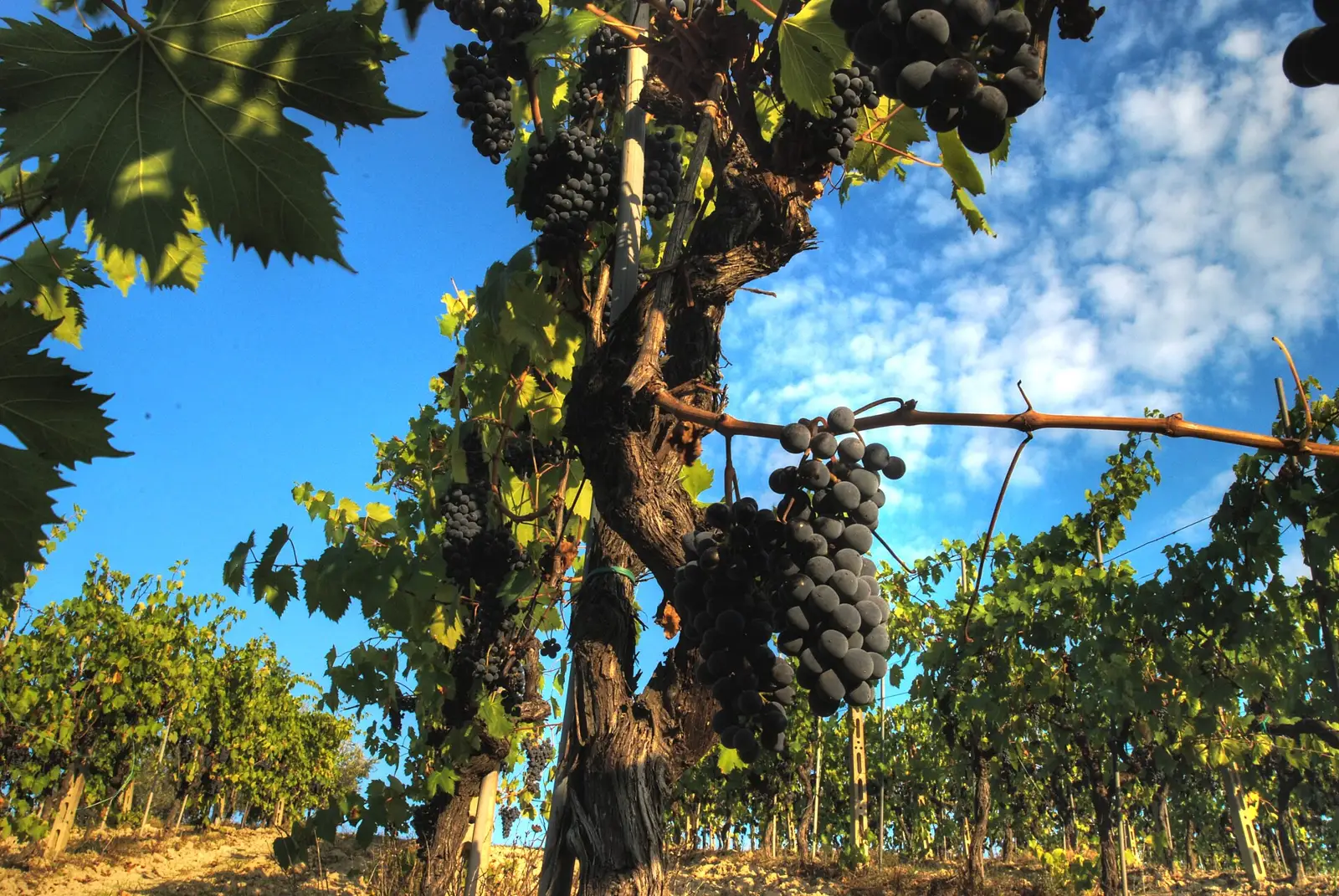
Sangiovese grapes on the vine in the Chianti wine region. Photo: Francesco Sgroi, CC BY 2.0, via Wikimedia Commons
How the rebels changed the law
Chianti DOC once required 50-80% Sangiovese plus white grapes such as Trebbiano Toscano or Malvasia, so the wines could not be 100% Sangiovese. Mario Incisa della Rocchetta planted Cabernet Sauvignon at Bolgheri in 1944, and the first commercial Sassicaia, the 1968 vintage, came out in 1971. Antinori created the modern Tignanello in 1975 as 80% Sangiovese and 20% Cabernet Sauvignon.
The pressure from these wines pushed regulators to create the IGT category. In Chianti itself the rules also moved on. Chianti Classico today must contain a minimum of 80 percent Sangiovese with a maximum of 20 percent other red varieties, and since 2006 it can be made exclusively with red grapes. On the Tuscan wineries tour with lunch you taste the appellation wine and the free blend at the same estates.
Which Super Tuscan names should you know?
Sassicaia is universally regarded as the first Super Tuscan, joined by Tignanello and Solaia, the wines Giacomo Tachis worked on.
You do not need the whole market to follow a tasting. Three names cover the history.
What can you actually taste near Florence
The famous labels are rarely what a tasting day pours. The Super Tuscans you taste from Florence are the estates' own: the Tuscan wineries tour with lunch pours Super Tuscans with Chianti Classico and Riserva at each of 3 wineries on the lunch option, and the San Gimignano wine tour pours up to 8 wines including Super Tuscans at 2 wineries. Tasting a rule-following Sangiovese and a free blend from the same cellar shows the difference better than the famous labels.
| Name | Why it matters |
|---|---|
| Sassicaia | The first Super Tuscan, Cabernet planted at Bolgheri in 1944, first commercial release in 1971 |
| Tignanello | Antinori, 80% Sangiovese and 20% Cabernet Sauvignon since 1975 |
| Solaia | Giacomo Tachis worked on it, as on Sassicaia and Tignanello |
Map: Where the Famous Super Tuscans Come From
Sassicaia comes from Bolgheri on the coast, Tignanello from the Antinori estate in Chianti Classico. The tours that pour Super Tuscans go to Chianti and San Gimignano.
- 1 Palazzo Antinori, FlorenceThe Antinori family palace in the city centre.
- 2 TignanelloAntinori estate, home of the 1975 Tignanello.
- 3 Tenuta San Guido, BolgheriSassicaia: Cabernet Sauvignon planted in 1944.
- 4 Greve in ChiantiStop on the tour with lunch, which pours Super Tuscans.
- 5 San GimignanoThe wine tour here pours Super Tuscans.
Numbers match the pins on the map.
Map data: OpenStreetMap.
Myth: Super Tuscan is an old Italian word. Truth?
False, the name was invented by the wine critic Robert Parker, not by any Italian tradition.
Travellers often assume the term comes from centuries of Tuscan usage. It comes from a wine critic.
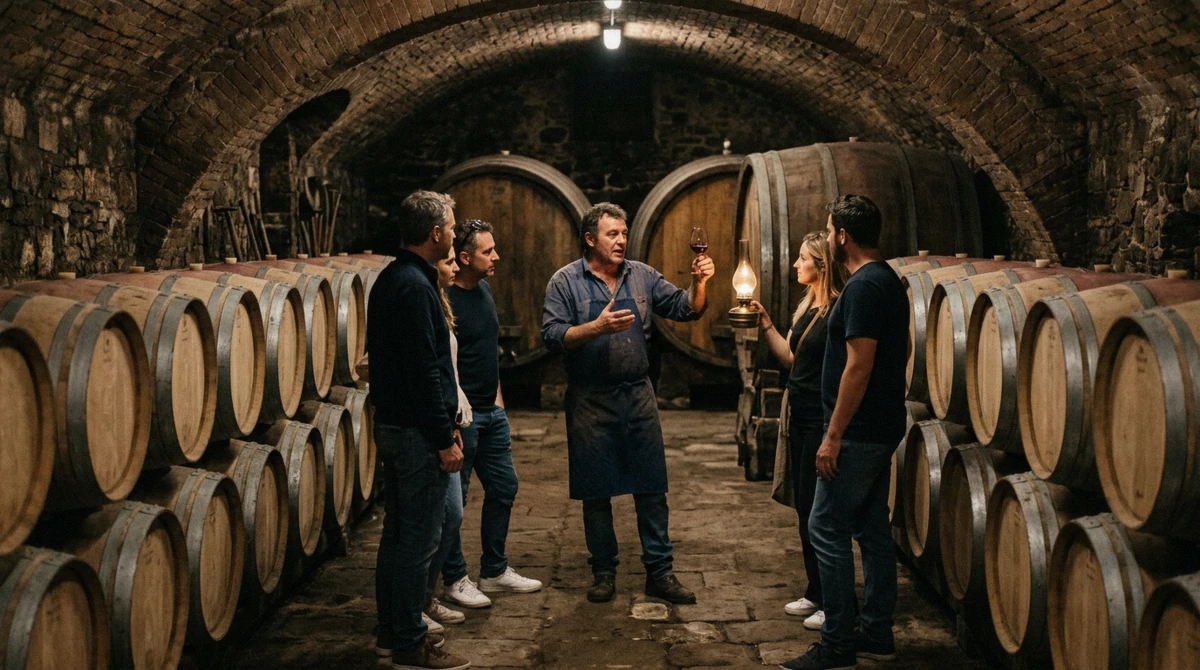
A cellar tour among the barrels at a Chianti winery. Illustrative image.
One critic, one nickname
The name Super Tuscan was invented by Robert Parker, and Italy does not recognize the term on labels. The rebellion it describes dates from the 1960s and 70s, when estates blended Cabernet Sauvignon and Merlot with Sangiovese and their wines were dismissed as vino da tavola.
For your own trip this is freeing. Ask what the estate bottles outside the Chianti rules, taste it next to the appellation wine, and decide which you prefer. The San Gimignano wine tour pours up to 8 wines, among them Chianti, Super Tuscans and Vernaccia di San Gimignano.
Is Super Tuscan dry or sweet, and what is it similar to?
Super Tuscans are dry red wines, similar to a Sangiovese red with Cabernet, Merlot or Syrah blended in, often with dark fruit such as black cherry.
Two of the most searched questions about Super Tuscan wine are whether it is dry or sweet and what it resembles. Both have simple answers.
What it resembles
A Super Tuscan usually starts from Sangiovese, the grape of Chianti Classico and Brunello, with Cabernet, Merlot or Syrah added. Some leave Sangiovese out: Trinoro Le Cupole is a blend of Cabernet Franc, Cabernet Sauvignon, Merlot and Petit Verdot with rich black cherry notes.
If your reference point is Chianti, taste a Chianti Classico first, then the estate's Super Tuscan. Chianti Classico needs at least 80% Sangiovese, so the contrast shows what the international grapes add.
Source: Chianti Classico Consortium.
Where can you taste Super Tuscan style wine from Florence?
In Chianti and around San Gimignano, on the tours whose tastings list Super Tuscans next to Chianti Classico.
The famous coastal bottles are hard to taste on a visit. The estates' own Super Tuscans are poured on two day tours from Florence.
Tours that pour Super Tuscans
The table compares the tours from Florence whose listings name Super Tuscans in the tasting, with prices, length and food from the listings. Both carry free cancellation 24 hours ahead and neither includes hotel pickup on its standard option.
| Tour | Price | Length | Wineries | Food |
|---|---|---|---|---|
| Tuscan wineries tour with lunch | $168.20 | 8 hours | 3 on the lunch option | Light lunch |
| San Gimignano wine tour | $84.66 | 7 hours | 2 | Snacks, no lunch |
Driving yourself?
Renting a car works, but know two things. Historic city centres often require a pass and you will be fined if you drive past a ZTL sign without one, and car hire companies may set a higher minimum age or require an International Driving Permit. A guided tour removes both problems, and everyone gets to taste.
Sources: Chianti Classico Consortium, UK Foreign Office.
Tours That Fit
Days from Florence whose tastings list Super Tuscans next to Chianti Classico or Vernaccia.
Prestige Rent Small-Group Tuscan Wineries Tour with Olive Oil and Lunch
Three family wine estates and a stop in Greve in Chianti, with a Tuscan light lunch paired with Chianti Classico, Riserva and Super Tuscan wines. A two-winery dinner departure at 2:30pm is also listed.
- Category
- Full-day winery tour
- Cancellation
- Free cancellation 24h
- Operator
- Prestige Rent
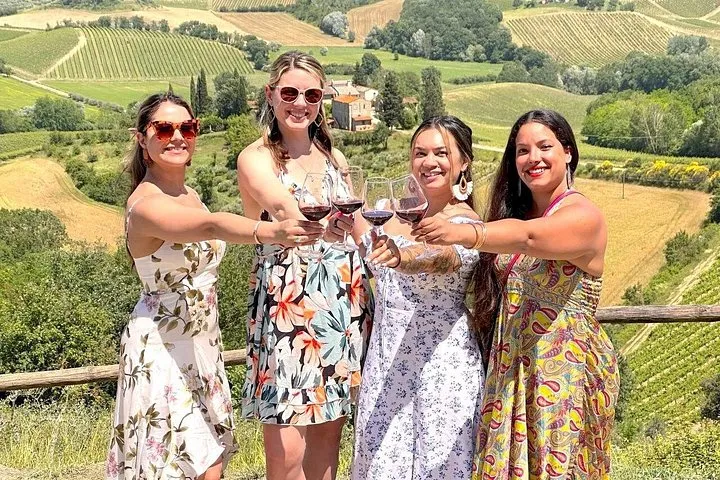
Italy on a Budget Tours Tuscany Wine Tour with 2 Wineries and San Gimignano
Two wineries near San Gimignano with up to 8 wines, three olive oils, balsamic vinegar and snacks, plus free time in the town. Lunch is not included, and a small-group minivan option runs for up to 8 guests.
- Category
- Full-day winery tour
- Cancellation
- Free cancellation 24h
- Operator
- Italy on a Budget tours
Brunello di Montalcino vs Super Tuscan: which should you taste?
Brunello is a strictly regulated Sangiovese with long ageing, while a Super Tuscan is a free blend, and a Val d'Orcia day trip lets you taste Brunello country.
The two wines follow different rules from neighbouring parts of Tuscany.
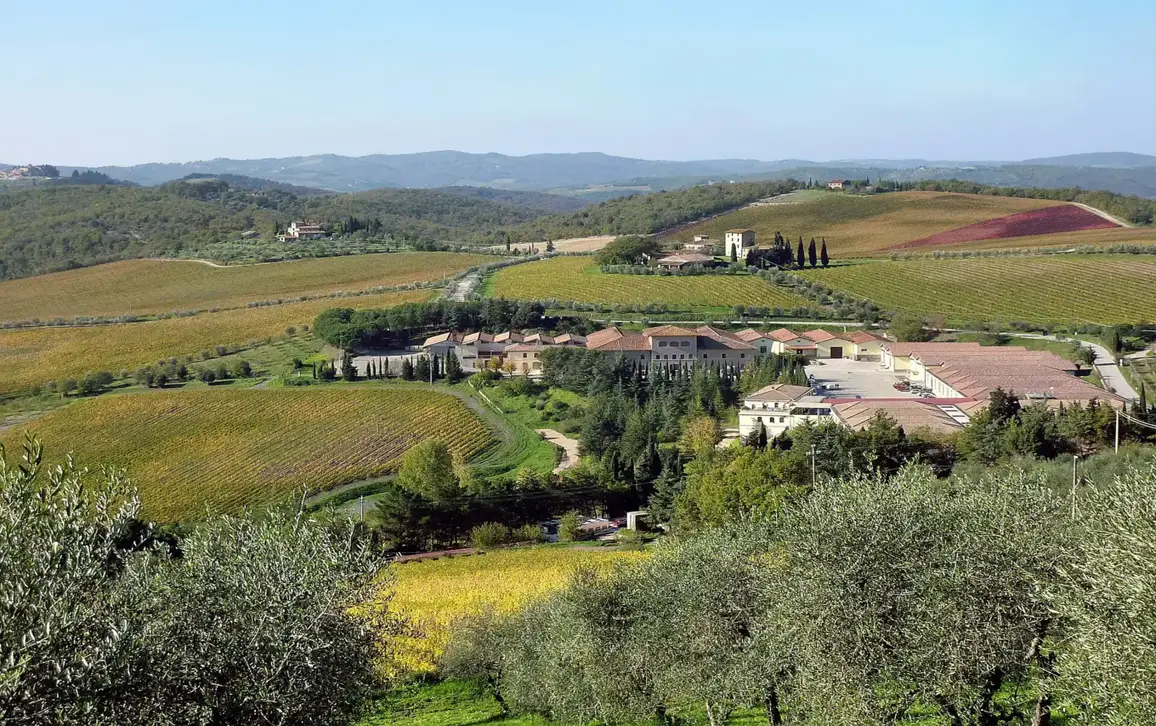
The Barone Ricasoli estate of La Madonna among the vines in Gaiole in Chianti. Photo: Adbar, CC BY-SA 3.0, via Wikimedia Commons
Tasting both on one trip
Montalcino sits in the Val d'Orcia, added to the UNESCO World Heritage List in 2004. The $82 Val d'Orcia wine tour from Florence runs 11.5 hours and pours Brunello di Montalcino at a small local winery and Vino Nobile at a historic Montepulciano winery, with no lunch included. Vino Nobile di Montepulciano must be at least 70 percent Sangiovese, with its Riserva aged at least three years.
That is a third rulebook in one day, and the contrast with a free blend shows how the Tuscan system works.
| Point | Brunello di Montalcino | Super Tuscan |
|---|---|---|
| Grapes | Sangiovese only | Free blend, often Sangiovese plus Cabernet or Merlot |
| Ageing | 2 years oak minimum plus 4 months bottle | No fixed rule |
| Legal category | DOCG | Not defined, often IGT |
| Best first taste | The Brunello wine tour day | The Tuscan wineries tour with lunch |
Sources: Brunello di Montalcino Consortium, Vino Nobile Consortium, Italian National Tourist Board.
What does Super Tuscan wine cost, and can you take bottles home?
Famous names are collector bottles, estates sell their own wines at the cellar, and US rules let a returning resident carry one liter home duty free.
The famous labels and an estate's own Super Tuscan are different purchases. Buy the estate bottle after the tasting and plan how to carry it.
Taking bottles home
US Customs and Border Protection allows one American liter, 33.8 fluid ounces, of alcohol in the returning resident personal exemption if you are at least 21 and it is for personal use. Amounts above that liter are dutiable, and some states allow more than one liter while CBP enforces stricter state alcohol laws. Pack bottles in checked luggage, because TSA allows carry-on liquids only in containers of 3.4 ounces or less.
Sources: US Customs and Border Protection, TSA.
What is a good shortlist of Super Tuscan wines for a beginner?
Start with Sassicaia for history, Tignanello for the Sangiovese-led style, and an estate's own Super Tuscan on a tasting day near Florence.
The top 10 lists online are shop inventories. A traveller needs three names, not ten.
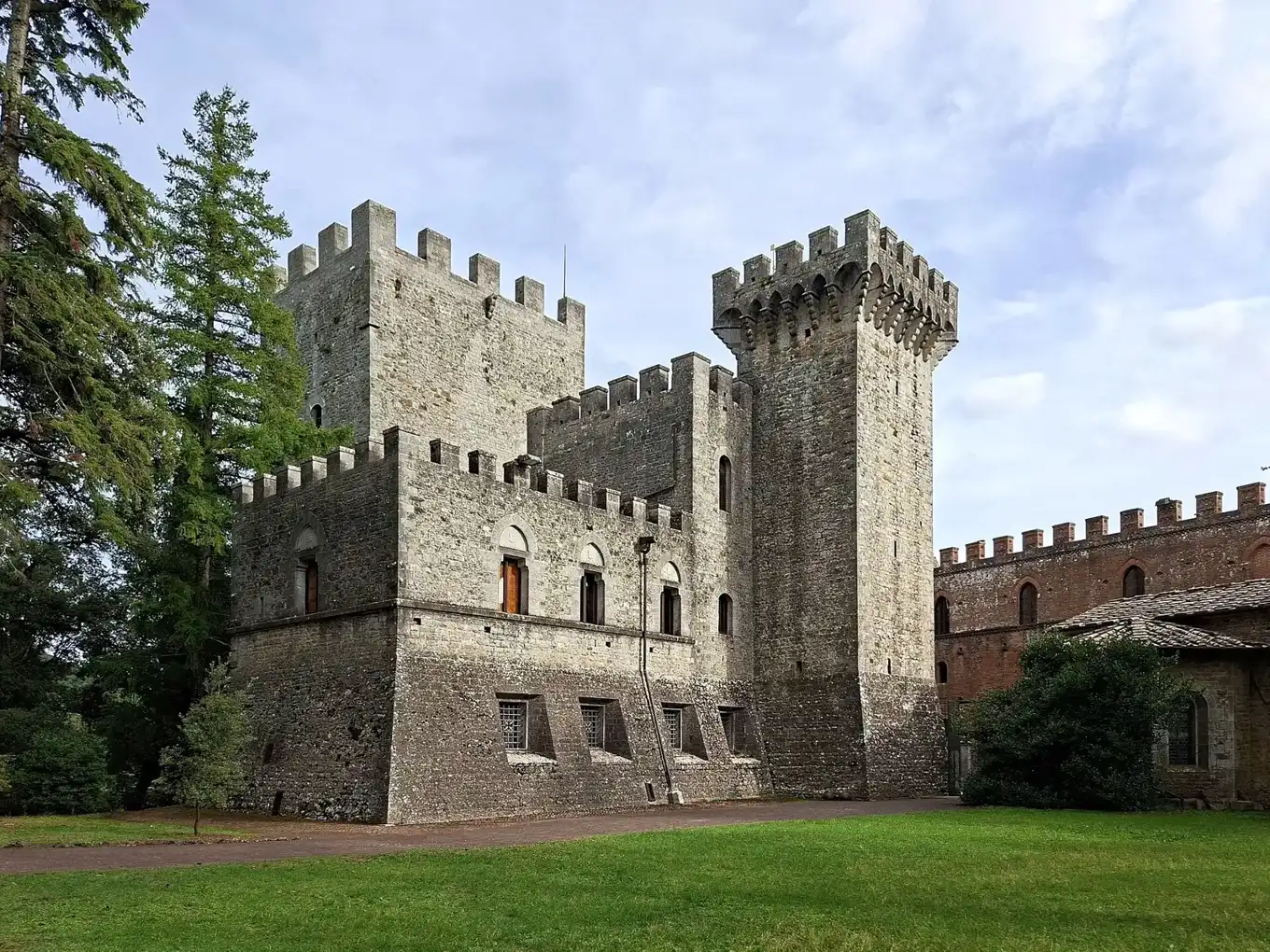
The fortress walls of Brolio Castle in Gaiole in Chianti. Photo: Argentieri.Andrea, CC BY-SA 4.0, via Wikimedia Commons
A three-line shortlist
First, read up on Sassicaia, the first Super Tuscan, released commercially in 1971. Second, look for Tignanello, the 1975 Antinori blend of 80 percent Sangiovese and 20 percent Cabernet Sauvignon, which shows the Sangiovese-led side of the style. Third, taste an estate's own Super Tuscan next to its Chianti Classico.
On the Tuscan wineries tour with lunch or the San Gimignano wine tour, ask the host to pour the appellation wine and the free blend side by side. That single request turns a standard tasting into a lesson in what Super Tuscan wine means.
When is the best time to tour the wineries near Florence?
Harvest season in Chianti Classico runs from the first half of September to the second half of October, and that is the liveliest time to visit.
Timing shapes the day more than any other choice. Tuscany pours wine all year, but not all months feel the same.
Harvest and the rest of the year
In Chianti Classico the harvest runs from the first half of September to the second half of October, depending on location and altitude. Visit then to see the cellars at work, and book early because tasting days fill.
Chianti Classico's rules have required red grapes only since 2006, so the white-grape era that set off the Super Tuscan rebellion is over in the zone. Food depends on the tour: the Tuscan wineries tour with lunch includes a light lunch, while the San Gimignano wine tour serves snacks and no lunch, so eat before it.
Sources: Chianti Classico Consortium, Chianti Classico Consortium.
Super Tuscan Wine FAQ
What is Super Tuscan wine similar to?
It is similar to a Sangiovese red with Cabernet, Merlot or Syrah added. Taste a Chianti Classico next to a Super Tuscan on the Tuscan wineries tour with lunch to feel the difference.
Is Super Tuscan dry or sweet?
Dry. Super Tuscans are red wines, and the fruit can taste ripe, such as black cherry, with no sweetness intended. See how it tastes.
What are the top 10 Super Tuscan wines?
No official ranking exists because the term is not legally defined. The essential names are Sassicaia, Tignanello and Solaia. See the beginner shortlist for where to start.
Super Tuscan wine price: what should I expect?
The famous labels are collector bottles. A day tour that pours Super Tuscans costs $84.66 per person on the San Gimignano wine tour or $168.20 with lunch, and bottles are bought on site.
Super Tuscan wine brands: which names come up most?
Sassicaia, Tignanello and Solaia, with Giacomo Tachis credited on all three. Read the famous names section for each one's story.
Brunello di Montalcino vs super tuscan: which is better?
Better depends on taste. Brunello is a strictly regulated Sangiovese with at least two years in oak, while a Super Tuscan is a free blend. You can taste Brunello on the Val d'Orcia wine tour from Florence.
Where to buy Super Tuscan wine after a tour?
At the estate after the tasting. Carry the bottles in checked luggage, and remember US customs allows one American liter duty free for returning residents aged 21 or over. Details are in taking bottles home.
More Guides
- Brunello Di Montalcino Wineries: Visiting Montalcino on a Wine Tour from Florence
Visit Brunello di Montalcino wineries from Florence in 2027: cellar tastings, Montalcino town and the Val d'Orcia. Compare the day tours.
- What Is Chianti Classico Riserva? A Guide for Wine Tours from Florence
Learn the Riserva ageing rules, taste profile and pairings, then pick the Chianti Classico wine tour from Florence that pours it. Plan your 2027 trip.
- Chianti vs Chianti Classico: What Is the Difference on a Florence Wine Tour?
Chianti vs Chianti Classico in 2027: two DOCGs, 80% vs 70% Sangiovese, 3 ageing levels. Learn the label, then book a Chianti tasting.